
How to Sell on Yaga — The Complete Guide for 2026
Zero fees. 1M+ users. South Africa's fastest-growing fashion resale marketplace — now with FLUF Connect crosslisting.



- Active users: 1 million+ South African users, 12 million monthly visits
- Seller fees: Zero — sellers keep 100% of the sale price. Buyers pay a protection fee at checkout
- Items listed: 3 million+ in the digital catalogue
- Best for: Pre-loved fashion, branded clothing, shoes, accessories — South Africa’s largest secondhand fashion marketplace
- Biggest advantage: Zero seller fees, integrated escrow payments, 5 built-in courier options for nationwide SA delivery
- Cross-list with FLUF Connect: Sync Yaga with Depop, eBay, Vinted, Shopify & more — free for 30 days
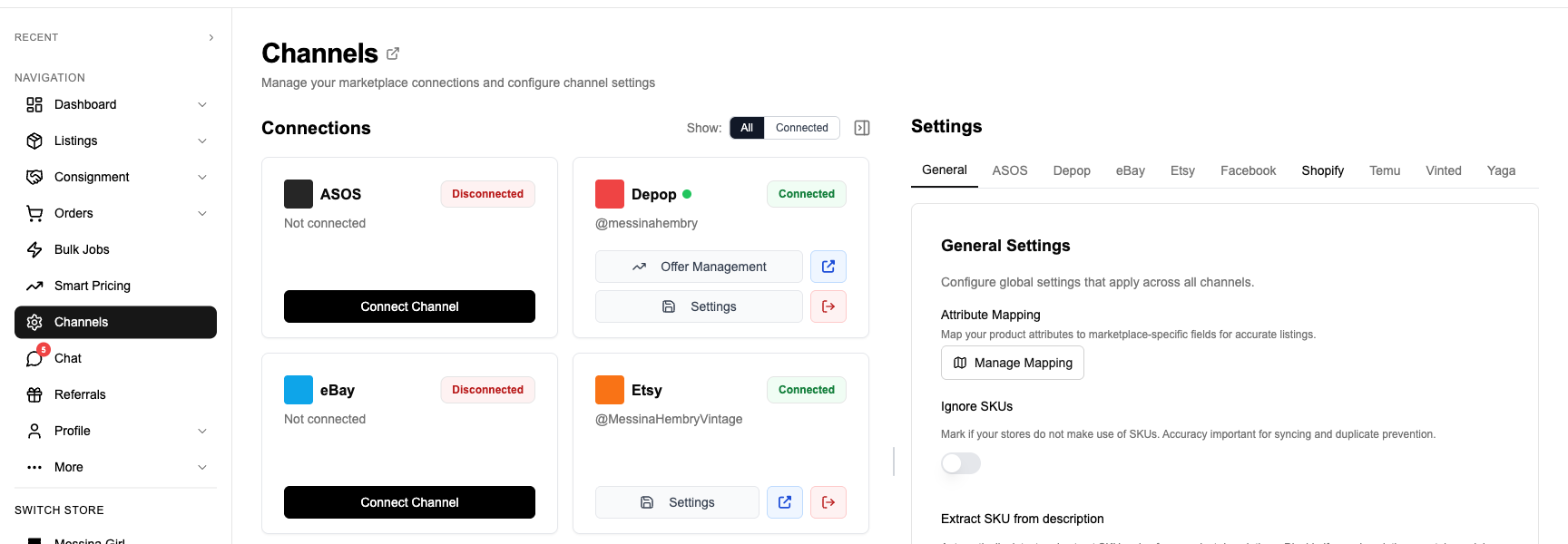
Table of Contents
- What Is Yaga?
- Why Sell on Yaga in 2026?
- Yaga Fees Explained
- How to Set Up Your Yaga Seller Account
- How to Create Yaga Listings That Actually Sell
- Photography Tips for Yaga Sellers
- Shipping and Delivery on Yaga
- How to Get Your Yaga Listings Seen
- Getting Paid and Tax Obligations
- What Sells Best on Yaga in 2026?
- Pro Tips from Top Yaga Sellers
- Common Mistakes New Yaga Sellers Make
- Cross-List Your Yaga Products to Sell Faster
What Is Yaga?
Yaga is South Africa’s largest online marketplace for pre-loved fashion, where individuals buy and sell secondhand clothing, shoes, and accessories. Founded in 2017 in Estonia by Karl Erik Kotkas and Aune Aunapuu, Yaga launched in South Africa in early 2020 and quickly became the country’s go-to platform for secondhand fashion, processing over 100,000 transactions per month.
Often described as “a mix between Instagram and eBay,” Yaga combines visual, social-feed-style browsing with integrated payments and built-in courier delivery. The platform has facilitated over R500 million in earnings for sellers since launch and currently hosts more than 3 million items in its catalogue. Yaga operates on a zero-seller-fee model — sellers keep 100% of their sale price, while buyers pay a protection fee at checkout.
Backed by EUR 7.2 million in funding (including investment from H&M Group), Yaga has expanded to Kenya and has MENA markets on its roadmap. The global secondhand apparel market is forecast to reach $367 billion by 2029, and Yaga is positioning itself as the leading platform for this space across Africa and the Middle East.
| Metric | Detail |
|---|---|
| Founded | 2017 (Estonia) |
| South Africa launch | 2020 |
| Headquarters | Tallinn, Estonia / Cape Town, South Africa |
| Active users | 1 million+ (South Africa) |
| Monthly visits | 12 million+ |
| Items in catalogue | 3 million+ |
| Transactions per month | 100,000+ |
| GMV run rate | EUR 50 million+ |
| Total seller earnings | R500 million+ since launch |
| Top categories | Women’s fashion, Men’s fashion, Kids’ clothing, Shoes, Accessories |
| Revenue model | Zero seller fees; buyer protection fee at checkout |
Why Sell on Yaga in 2026?
Yaga has become the dominant force in South African online fashion resale. Here’s why it deserves a place in every SA reseller’s strategy.
Zero Seller Fees
Yaga charges sellers absolutely nothing. No listing fee, no transaction fee, no commission. You list for free, sell for free, and keep 100% of your asking price. The platform monetises through a buyer protection fee (6.5% + R19.90) charged at checkout — a cost the buyer pays, not you.
South Africa’s Largest Fashion Resale Audience
With over 1 million active users and 12 million monthly visits, Yaga is where South African fashion buyers go first when shopping for pre-loved clothing. Unlike Gumtree or Facebook Marketplace, Yaga’s audience is specifically looking for fashion — meaning higher purchase intent and faster sales for clothing sellers.
Integrated Payment Protection
Yaga uses an escrow payment model — the buyer pays at checkout, but funds are held by Yaga until the buyer confirms they’ve received the item. This protects both parties and eliminates the risk of non-payment that plagues classifieds platforms where cash exchanges happen in person.
Built-In Courier Network
Five integrated courier options (The Courier Guy, PAXI, Pargo, Aramex, PostNet) mean sellers can ship nationwide without leaving the app. No need to negotiate shipping separately or arrange meetups — the buyer pays delivery costs at checkout and the seller books the courier through Yaga.
Growing Platform With Momentum
Yaga’s GMV grew from EUR 11 million to EUR 50 million+ in under two years. With EUR 7.2 million in funding (including H&M Group as an investor) and expansion into Kenya and MENA markets, the platform is scaling rapidly. Early sellers benefit from a growing buyer base.
| Yaga | Facebook Marketplace SA | Gumtree SA | |
|---|---|---|---|
| Listing fee | Free | Free | Free (promoted listings paid) |
| Seller commission | 0% | 0% | 0% |
| Payment protection | Yes (escrow) | No | Limited (“Pay & Ship”) |
| Integrated shipping | Yes (5 couriers) | No | Limited |
| Fashion-focused | Yes (core focus) | No (general) | No (general) |
| Monthly visits | 12 million+ | Not disclosed | Not disclosed |
| Best for | Pre-loved fashion | General items, local sales | General items, local sales |
Yaga Fees Explained
Yaga’s fee model is one of the simplest in e-commerce: sellers pay nothing. Here’s the complete breakdown.
Seller Fees: Zero
Listing an item on Yaga is free. When your item sells, you keep 100% of your asking price. There is no final value fee, no transaction fee, no commission, and no subscription. This makes Yaga one of the most seller-friendly platforms globally — comparable to Vinted and Depop’s zero-seller-fee models.
Buyer Protection Fee (Paid by Buyers)
Buyers pay a protection fee at checkout: 6.5% of the total cost (item + delivery) plus R19.90. This funds the escrow payment system that holds the buyer’s money until they confirm receipt of the item. The seller never sees this charge — it’s added on top of your listed price.
Delivery Costs (Paid by Buyers)
The buyer also pays delivery costs at checkout. Rates vary by courier and parcel size but typically range from R50 to R150 for standard domestic delivery within South Africa.
Worked Example: What You Keep on a R300 Sale
- Listing fee: R0.00
- Commission / final value fee: R0.00
- Transaction fee: R0.00
- Total fees to seller: R0.00
- You keep: R300.00 (100% of your asking price)
- Item price: R300.00
- Delivery: R80.00
- Buyer protection fee (6.5% of R380 + R19.90): R44.60
- Total buyer pays: R424.60
Fee rates as published on Yaga’s official help centre. Verify current rates before listing, as fees may change.
Already selling on Yaga? Cross-list to eBay, Depop, and Vinted to reach international buyers.
How to Set Up Your Yaga Seller Account
Getting started on Yaga takes under 10 minutes. The platform is mobile-first — most sellers use the iOS or Android app rather than the web version.
Step-by-Step Setup
- Download the Yaga app — Available on the App Store and Google Play. You can also use the web version at shop.yaga.co.za.
- Sign up — Register using your Facebook, Google, or Apple ID. This is the fastest route and links your profile photo automatically.
- Set up your shop profile — Add a profile photo, write a short bio about what you sell (e.g., “Curated vintage finds and designer pieces”), and choose a shop name.
- Add your bank details — Link a South African bank account so you can withdraw earnings from your Yaga Wallet. This is required before you can receive payouts.
- Set delivery preferences — Choose which courier options you want to offer buyers (The Courier Guy, PAXI, Pargo, Aramex, PostNet). Enabling more options gives buyers flexibility and increases your chances of a sale.
- List your first item — Tap “Add item,” upload photos, add details, set your price, and publish. Your item is immediately visible to Yaga’s 1 million+ users.
Time estimate: You can have your first item listed within 10 minutes of downloading the app.
How to Create Yaga Listings That Actually Sell
Yaga’s visual, feed-based layout means your listing’s first impression comes from photos. But title, description, and pricing all play a role in converting browsers into buyers.
Title Optimisation
Include the brand, item type, size, colour, and condition. Yaga buyers often search by brand or item type, so make these the first words in your title.
❌ “Pretty dress for sale”
✅ “Zara Midi Dress Black Size M — Like New”
Description Writing
Keep it concise but informative:
- What it is — brand, style, material
- Size and fit — include measurements if the sizing runs large or small
- Condition — be honest about any wear, marks, or flaws
- Why you’re selling — “Decluttering” or “Doesn’t fit anymore” builds trust
- Styling suggestion — “Pairs beautifully with…” adds a personal touch that resonates with Yaga’s social-commerce audience
Pricing Strategy
- Price at 50-70% below original retail — this is the sweet spot for pre-loved fashion on Yaga. Buyers expect significant savings off retail
- Check comparable listings — search for similar items on Yaga to see what others are asking
- Factor in the buyer protection fee — remember, your buyer pays 6.5% + R19.90 on top of your price. If you price too high, the total checkout cost may deter purchases
- Use price drops strategically — when you lower a price, all buyers who “liked” your item get a notification. This is a powerful tool for moving stale inventory
Category and Details
Always select the most specific category available. Fill in brand, size, colour, and condition accurately — these are the filters buyers use to narrow search results. Incomplete listings miss filtered searches entirely.
Photography Tips for Yaga Sellers
Yaga allows up to 6 photos per listing. On a visual, feed-based platform, photo quality is the single biggest factor in whether someone taps on your listing.
What to Photograph
- Full item front view — clear, well-lit, showing the complete item
- Back view — buyers want to see both sides
- Label/brand tag — proves authenticity and shows size
- Close-up of fabric/texture — shows quality
- Any flaws or wear — photograph every imperfection clearly. Honesty prevents returns
- Styled/worn shot — Yaga’s social-commerce audience responds well to lifestyle photos showing how the item looks when worn. This is different from eBay’s preference for clinical product shots
Lighting and Background
Natural daylight near a window gives the best results. Use a clean, uncluttered background — a plain wall, a door, or a simple flat-lay setup. Yaga’s feed is visual-first, so listings with bright, attractive photos get more taps and likes.
Avoid dark rooms, flash photography, and busy backgrounds. Your first photo is your thumbnail — make it count.
Shipping and Delivery on Yaga
Yaga has integrated five courier services for nationwide delivery within South Africa. Buyers pay delivery costs at checkout — sellers just need to package and hand off the parcel.
Courier Options
| Courier | How It Works | Speed | Best For |
|---|---|---|---|
| The Courier Guy | Locker-based; book via Yaga app | 2-5 business days | Most popular option, wide locker network |
| PAXI | Token/PIN system via Yaga | 2-5 business days | Affordable, PEP stores as drop-off points |
| Pargo | Locker-based; book via Yaga | 3-5 business days | Pick n Pay and other retail pickup points |
| Aramex | Seller books directly with courier | 1-3 business days | Faster delivery, door-to-door |
| PostNet | Seller books directly with courier | 2-4 business days | Nationwide PostNet store network |
How Delivery Works
- Buyer purchases your item and selects a delivery option at checkout
- Yaga generates a shipping label or booking reference (for integrated couriers)
- You package the item and drop it off at the relevant courier point
- The buyer receives the item and confirms receipt in the app
- Your funds are released to your Yaga Wallet
Packaging Tips
- Use a clean, sealed packet or box — no loose or damaged packaging
- Wrap items in tissue paper for a nicer unboxing experience
- Include a thank-you note — it encourages positive buyer feedback
- For delicate items, add bubble wrap or extra padding
Returns
Yaga’s buyer protection covers items that arrive significantly different from the listing description. If a buyer disputes, Yaga mediates. Accurate descriptions and photos are your best defence against disputes — list honestly and you’ll rarely encounter issues.
How to Get Your Yaga Listings Seen
Yaga doesn’t publicly document its ranking algorithm, but patterns from successful sellers reveal what drives visibility on the platform.
Recency Matters
Newly listed items appear higher in search results and the browse feed. If items have been sitting unsold for weeks, consider deleting and relisting them to refresh their position. FLUF Connect’s crosslisting tools can help you manage inventory across Yaga and other platforms efficiently.
Photo Quality Drives Taps
Yaga’s feed is image-first. Listings with bright, clear, attractive photos get more taps, likes, and shares — all of which signal to Yaga that your listing is worth showing to more buyers.
Complete Item Details
Fill in every field: brand, size, colour, condition, category. Buyers who use filters (and many do) will never see your listing if these fields are empty.
Price Drops as a Visibility Tool
When you reduce a price, every buyer who “liked” that item gets a push notification. This is one of Yaga’s most powerful features for sellers — strategically dropping prices on stale inventory can trigger a wave of renewed interest.
Social Sharing
Yaga encourages sellers to share their shop links on WhatsApp groups, Instagram stories, and other social channels. External traffic to your Yaga listings signals demand to the platform and can boost your visibility in the feed.
| Factor | Impact | What You Can Control |
|---|---|---|
| Listing recency | High | Relist stale items; list new items regularly |
| Photo quality | High | Use natural light, clean backgrounds, show all angles |
| Complete item details | High | Fill in brand, size, colour, condition, category |
| Price competitiveness | Medium | Research comparable listings, price 50-70% below retail |
| Likes and engagement | Medium | Share on social media, use price drops to trigger notifications |
| Social sharing | Low-Medium | Share shop link on WhatsApp, Instagram, Facebook |
Getting Paid and Tax Obligations on Yaga
Understanding Yaga’s payment flow and South African tax rules is important before scaling your sales.
How You Get Paid
Yaga uses an escrow payment system:
- Buyer pays at checkout — funds are held by Yaga
- Seller ships the item
- Buyer receives the item and taps “Item received” in the app
- Funds are released to your Yaga Wallet
- You initiate a payout from your Wallet to your bank account
- Payout processing time: 1-3 business days after you request a withdrawal
- Important: Payouts withdraw your entire wallet balance — partial withdrawals are not supported
- Bank requirement: Must be a recognised South African bank account
- Wallet balance can also be used to purchase items on Yaga directly
Tax Obligations in South Africa
Important disclaimer: This is general guidance, not tax advice. Consult a qualified tax practitioner for your specific situation.
- SARS considers income from selling goods online as taxable if you are carrying on a trade — meaning you regularly buy items to resell at a profit
- Occasional selling of personal items (clearing out your wardrobe) is generally not considered trading income
- If your total annual income (including Yaga sales) exceeds R95,750 (2025/26 tax year threshold for under 65s), you must file an income tax return
- VAT registration: Required if your taxable supplies exceed R1 million per 12-month period
- Keep records of all purchases, sales, delivery costs, and packaging expenses — these are deductible if you’re trading
For International Readers
Yaga currently operates primarily in South Africa (with expansion to Kenya). If you’re selling on Yaga from outside South Africa, consult a tax advisor in your country about reporting foreign marketplace income.
What Sells Best on Yaga in 2026?
Yaga is fashion-focused, so the top-selling categories are all clothing-related. Here’s what moves fastest based on platform trends and seller insights.
| Category | Avg. Sale Price | Competition | Sell-Through | Tip |
|---|---|---|---|---|
| Branded women’s clothing | R80-250 | High | High | Zara, H&M, Cotton On, Mr Price — popular SA brands sell fastest |
| Designer/luxury pieces | R300-1,500+ | Low | Medium | Authenticity matters — show labels, receipts, certificates |
| Men’s fashion | R80-200 | Medium | Medium | Less competition than women’s — a growing opportunity |
| Kids’ clothing | R30-120 | Medium | High | Kids outgrow clothes fast — parents buy frequently |
| Shoes & sneakers | R100-400 | Medium | High | Include brand, exact size, and condition. Nike, Adidas, Vans move quickly |
| Accessories (bags, jewellery) | R50-300 | Low-Medium | Medium | Branded handbags and sunglasses perform well |
What’s Trending
- Influencer closet sales — Yaga actively promotes local influencer wardrobes, and items from these shops sell quickly due to built-in audiences
- Vintage and unique finds — one-of-a-kind pieces with character command higher prices and attract engaged buyers
- Affordable branded basics — everyday pieces from popular SA brands priced at R50-150 are the bread and butter of high-volume sellers
- Sustainable fashion — the pre-loved angle resonates strongly with younger SA buyers who are increasingly eco-conscious
Pro Tips from Top Yaga Sellers
- Use price drops to create urgency — Yaga notifies every buyer who “liked” your item when you drop the price. If an item hasn’t sold in 2 weeks, reduce the price by 10-15% to trigger a wave of notifications.
- List consistently, not in bursts — adding 3-5 items daily keeps your shop appearing in the “new” feed regularly. A bulk upload of 50 items followed by weeks of silence is less effective than steady, regular listings.
- Share your Yaga shop on WhatsApp and Instagram — external traffic drives sales. Many top Yaga sellers maintain Instagram accounts showcasing their inventory with links to their Yaga shop.
- Cross-list to reach international buyers — Yaga’s audience is primarily South African. By cross-listing your fashion inventory to platforms like eBay, Vinted, and Depop, you access millions of buyers globally. FLUF Connect makes this automatic.
- Respond to buyer messages quickly — fast replies build trust and convert enquiries into sales. Yaga’s mobile-first design makes it easy to respond from your phone.
- Bundle items to increase order value — offer discounts for buyers who purchase multiple items. This increases your average sale value and reduces per-item shipping costs.
- Photograph items on a person where possible — Yaga’s social-commerce feel means styled, worn photos often outperform flat-lay product shots. This is the opposite of eBay where clean product photos work best.
- Keep your shop curated — remove sold items promptly and delist anything you no longer want to sell. A clean, active shop with current inventory looks more trustworthy than one filled with outdated or sold-out listings.
Common Mistakes New Yaga Sellers Make
- Using dark, blurry photos — Yaga is a visual platform. Your listing thumbnail is competing with thousands of others in the feed. Bright, clear photos in natural light are non-negotiable.
- Overpricing relative to the market — Yaga buyers expect 50-70% off retail. Check what similar items sell for before pricing yours. Remember that buyers also pay the protection fee on top of your price.
- Leaving item details incomplete — empty brand, size, or condition fields mean your listing won’t appear in filtered searches. Fill in everything.
- Not using price drops on stale inventory — items sitting unsold for weeks lose visibility. A strategic price drop triggers notifications to everyone who liked the item — it’s free marketing.
- Only selling on one platform — Yaga’s audience is South Africa-focused. If your items have international appeal (branded fashion, vintage, sneakers), cross-listing to international platforms dramatically increases your buyer pool.
- Slow shipping — buyers expect fast turnaround. Ship within 1-2 days of sale and use one of Yaga’s integrated couriers for the smoothest experience. Delays frustrate buyers and can lead to disputes.
- Ignoring the social aspect — Yaga is social commerce. Follow other sellers, like items, share your shop link. Activity on the platform increases your visibility.
Cross-List Your Yaga Products to Sell Faster
Yaga’s 1 million users are overwhelmingly based in South Africa. If your fashion inventory has international appeal — branded items, vintage pieces, popular sneakers — cross-listing to global platforms puts the same inventory in front of hundreds of millions of additional buyers.
Which Platforms Pair Well with Yaga?
- Yaga + eBay: eBay’s 132 million active buyers include millions searching for the same branded fashion you sell on Yaga. eBay’s global reach turns your SA inventory into international listings.
- Yaga + Depop: Depop’s Gen Z audience loves vintage and unique fashion pieces. Cross-listing to Depop gives you access to trend-driven buyers in the UK, US, and Australia.
- Yaga + Vinted: Vinted’s 100 million buyers across Europe are actively shopping for pre-loved fashion — exactly what Yaga sellers offer. Cross-list to Vinted for zero-fee European exposure.
- Yaga + Shopify: Build your own branded online store for your best pieces while keeping Yaga as your local marketplace channel.
How FLUF Connect Works for Yaga Sellers
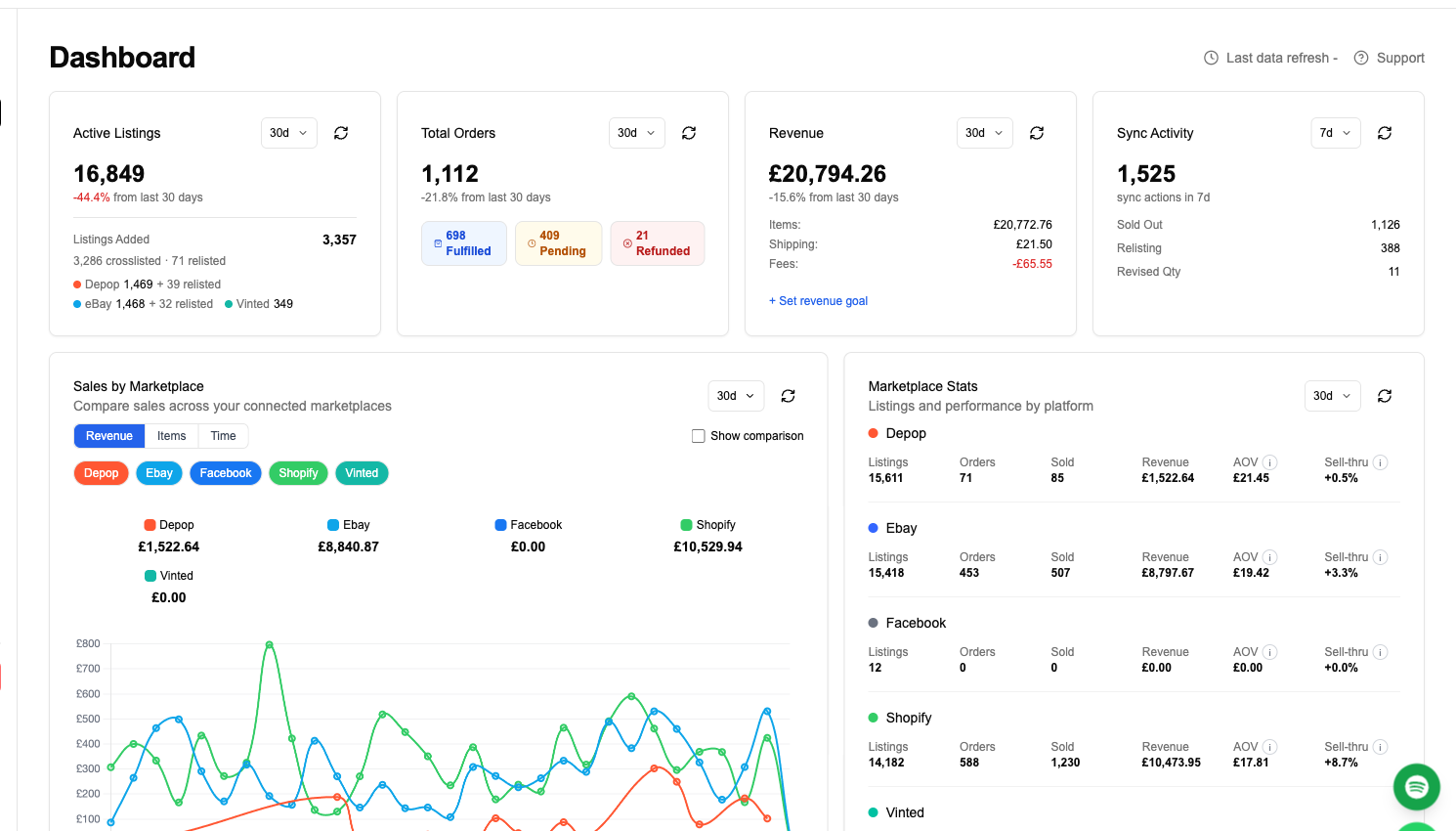
FLUF Connect is a multi-marketplace crosslisting and automation platform that connects your Yaga account with eBay, Depop, Vinted, Shopify, Etsy, and Facebook Marketplace. Here’s how it works:
- Connect your Yaga account — link your Yaga session to FLUF Connect. Takes under 5 minutes.
- Select products to cross-list — choose individual items or select in bulk. FLUF transfers your photos, title, description, price, and item details automatically.
- Automatic inventory sync — when an item sells on any platform, FLUF removes it from all others. No manual delisting, no overselling.
| Feature | Yaga Support |
|---|---|
| Crosslisting | Yes — to/from eBay, Depop, Vinted, Shopify, Etsy, Facebook Marketplace |
| Inventory sync | Yes — real-time across all connected channels |
| Auto-relisting | Coming soon |
| Offer management | N/A (Yaga does not have an offer system) |
| Order sync | Coming soon |
| Bulk operations | Yes — bulk crosslist to other platforms |
Pricing
Free for 30 days with full access to all features, no credit card required. After your trial, plans start from £19/month for up to 500 products. All plans include crosslisting and inventory sync. 500 free crosslistings included. See full pricing.
Why Yaga Sellers Choose FLUF Connect
- Go global from South Africa — your Yaga inventory reaches 200+ million buyers on eBay, Depop, Vinted, and Shopify
- Free automation — auto-relisting and offer management on eBay, Depop, and Vinted included at no extra charge
- Prevent overselling — real-time inventory sync means when an item sells on Yaga, it’s automatically removed from all other platforms
- Dedicated support — responsive, knowledgeable support from people who understand reselling
Frequently Asked Questions
Start Crosslisting for Free Today
500 free crosslistings. No credit card. Set up in under 10 minutes.