FLUF Connect

Sell on Instagram: Posting Product Content to Build Your Presence

How to use Instagram for product discovery as a reseller — professional accounts, carousels, consistent posting, and how FLUF Connect turns your product photos into ready-to-publish Instagram posts.

26 marketplaces, one dashboard Auto inventory sync WhatsApp, email & in-app support

Instagram is where a huge share of shoppers now discover products before they ever buy — but for a busy reseller listing across Depop, Vinted, eBay and more, keeping a consistent Instagram presence usually loses out to the actual work of listing and shipping. This guide explains how selling-adjacent marketing on Instagram works in 2026, what a professional account gives you, why carousels and consistent posting matter for product discovery, and how FLUF Connect turns the product photos you already have into ready-to-publish Instagram posts and carousels — so your shopfront stays alive while your selling continues on the marketplaces and your own store.

Key Takeaways

  • Audience: Instagram reached 3 billion monthly active users in September 2025 — one of the largest product-discovery surfaces on the internet.
  • Discovery, not checkout: Instagram is a place to be found. Around 70% of users use Instagram for product discovery; your actual selling still happens on your marketplaces and your own store.
  • Professional account required: To publish consistent product content with FLUF Connect, you need a connected Instagram professional (Business or Creator) account — switching is free and keeps all your followers.
  • Carousels work: Multi-image carousel posts earn around 1.4× the reach of single static posts and the highest engagement of any feed format — ideal for showing a product from every angle.
  • What FLUF does: FLUF Connect auto-creates Instagram posts and carousels (a single image, or up to a 10-image carousel) from your product photos, with captions and optional scheduling — no manual design work.
  • Pricing: FLUF Connect starts at £19/month on the Growth plan (500 products), with automation included in every plan, not sold as a paid add-on — try FLUF Connect.
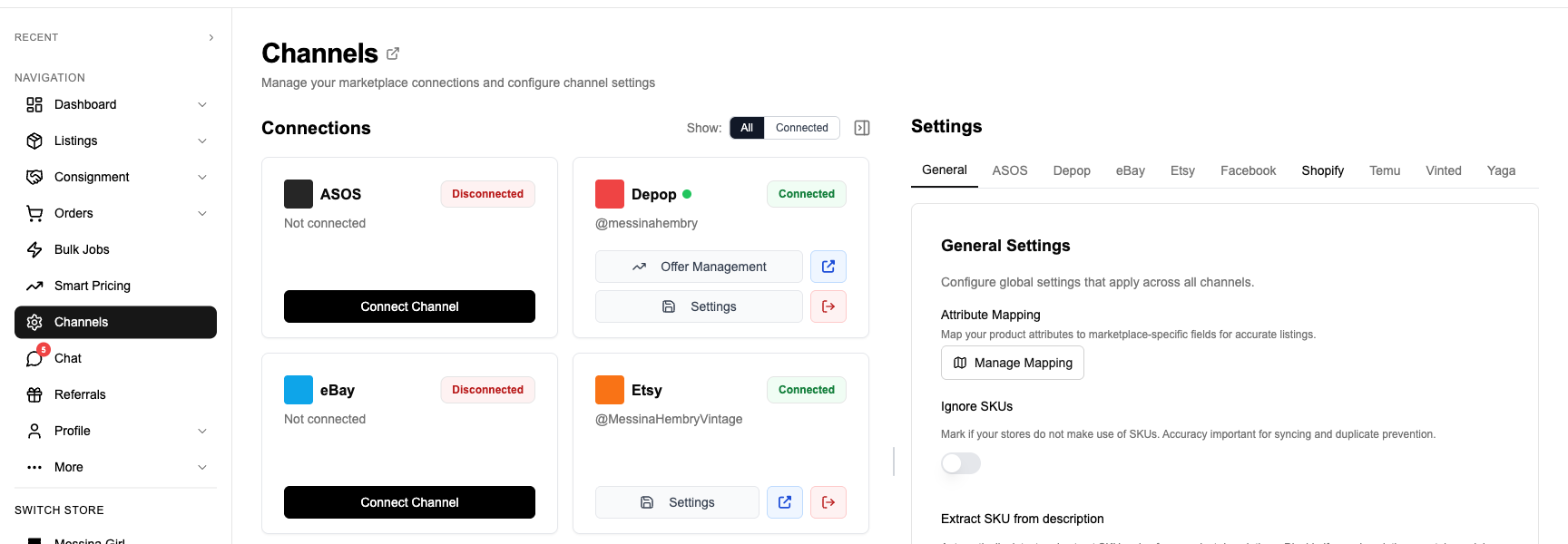
FLUF Connect channels screen showing connected marketplaces and content channels

Try FLUF Connect

What This Guide Covers

What Is Instagram for Resellers and Small Businesses?

Instagram is a photo- and video-first social platform owned by Meta, used to share images, carousels, Reels (short videos) and Stories. For resellers and small businesses it is best understood as a discovery and brand-building surface: a place where potential buyers find your products, follow your shop, and form an impression of your taste and reliability — before clicking through to buy on a marketplace or your own website.

The scale is hard to ignore. Instagram crossed 3 billion monthly active users in September 2025, becoming only the fourth Meta-family app to reach that milestone. It is the third most popular social app worldwide, with India alone accounting for over 350 million active users. For a reseller whose inventory might otherwise only be seen by people actively searching a marketplace, Instagram is a way to reach people while they are simply scrolling.

Instagram at a Glance

Metric Detail
Owner Meta Platforms (also owns Facebook, WhatsApp)
Monthly active users 3 billion (September 2025)
Primary content formats Single image, carousel (multi-image), Reels (video), Stories
Biggest single market India (350M+ users)
Account types Personal, and professional (Business or Creator)
Cost to use Instagram Free to download and post (Instagram’s own service)
Role for sellers Product discovery, brand presence, traffic to listings

It is worth being precise about one thing: Instagram is not a resale marketplace. You do not list inventory, manage stock, or process resale orders on Instagram the way you do on Depop, Vinted or eBay. Instagram’s value to a reseller is attention — getting your products in front of people, then sending them somewhere they can buy.

Who Is Instagram Content Publishing For?

Instagram content publishing suits any seller who already has good product photos and wants those photos working harder. If you are photographing items to list them anyway, the same images can build an audience — you simply need a way to publish them consistently without spending evenings in a design app.

The Side-Hustle Reseller

You sell across one to three marketplaces and your time is the scarce resource. You know an Instagram presence would help, but realistically you post once a fortnight when you remember. Automated posting keeps the feed alive without stealing time from sourcing and shipping.

The Scaling Reseller

You are turning reselling into a business and you want a recognisable brand, not just listings scattered across platforms. A consistent Instagram grid — new stock posted as it lands — signals that you are a serious, active shop worth following and buying from.

The Vintage or Niche Curator

Your edit is your differentiator. Carousels let you show texture, labels, fit and styling in a single swipeable post, which is exactly how vintage and niche buyers like to evaluate items. Instagram’s visual format flatters a well-curated rail.

The Small Business Owner

You run a store (perhaps on Shopify) and crosslist to marketplaces. Instagram is your top-of-funnel: it warms up an audience that then clicks through to your shop. Posting product content reliably is the marketing chore most likely to slip — which is exactly what automation fixes.

Why Build an Instagram Presence as a Reseller in 2026?

If your time is already stretched across listing and shipping, it is fair to ask whether Instagram is worth the bother at all. The short answer is that Instagram reaches buyers at a stage no marketplace can: before they have decided to shop. A marketplace search captures people who already know they want a denim jacket. Instagram captures people scrolling idly who see your denim jacket and decide they want it. That earlier touchpoint is the whole game.

You Reach Buyers Who Aren’t Searching Yet

Marketplaces are demand-capture: they serve people actively looking. Instagram is demand-generation: it puts products in front of people who weren’t looking but are receptive. With around 70% of users using Instagram for product discovery, the platform is full of people in a browsing, magpie-ish frame of mind — exactly the mindset that resale thrives on. A great find scrolling past at the right moment is an impulse a marketplace listing will never replicate.

You Build a Following That Comes Back

A marketplace sale is usually a one-off — the buyer may never see your shop again. An Instagram follower, by contrast, is a recurring audience. Every new post reaches people who have already shown they like your taste, which is why each drop sells faster than it would to cold traffic. Over time a following becomes a genuine asset: a built-in audience for every new piece of stock, owned by you rather than rented from a marketplace’s search algorithm.

You Control Your Brand and Aesthetic

On a marketplace, your listings sit in a sea of competitors, formatted to the platform’s template. On Instagram, your grid is yours. A coherent, well-curated feed signals taste, reliability and care — the soft signals that make a buyer trust a small seller. For vintage and niche curators especially, the aesthetic is the product, and Instagram is the only surface that lets it shine.

You Feed Traffic Into the Channels That Convert

Best of all, an Instagram presence does not pull you away from where you actually sell — it pushes traffic toward it. Discovery on Instagram, purchase on your marketplaces and store. Because the same product photos that build your feed are the ones you already use to list, the marginal effort of maintaining the presence is small — especially when the posting itself is automated. The upside is asymmetric: little ongoing cost, a compounding audience.

Instagram vs a Marketplace at the Top of Your Funnel

Instagram A resale marketplace
Primary job Discovery & brand Search, transaction, fulfilment
Buyer mindset Browsing, receptive Actively searching
Audience relationship Recurring followers Mostly one-off buyers
Where the sale completes Off-platform (your store/marketplace) On the marketplace
Brand control High (your grid, your voice) Low (platform template)

Discovery, Not Checkout: What Instagram Actually Does for Sellers in 2026

Instagram is a discovery engine, not a checkout. Around 70% of Instagram users use the platform for product discovery, frequently through trending content and creators they follow. The platform’s job in your selling funnel is to create awareness and desire — then route interested people to where they can actually buy.

This matters because Instagram’s own commerce features have changed direction. Meta has been phasing out native in-app checkout for most Facebook and Instagram Shops, moving away from processing payments inside the app. In practice, Instagram Shops now behave more like an enhanced visual gallery: discovery happens in the feed, and the actual purchase completes on your own website or marketplace. As industry coverage of the change put it, conversion is moving off-platform.

For a reseller this is genuinely good news, because it lines up perfectly with how you already work. You do not want to run a parallel inventory on Instagram. You want Instagram to send buyers to the listings you already maintain on marketplaces and your store — the places that handle stock, payment and fulfilment. FLUF Connect leans into exactly this model: it helps you post product content on Instagram to drive discovery, while your selling stays on the channels built for it.

Where Instagram Sits in Your Selling Funnel

Stage Where it happens What you need
Discovery / awareness Instagram feed, carousels, Reels, Stories Consistent, attractive product posts
Consideration Your profile, link in bio, captions A clear path to where you sell
Purchase Your marketplace listings and your own store Live listings with stock, price and checkout
Fulfilment Your marketplace / store order system Order and shipping handled where you list

Try FLUF Connect

Why You Need a Professional (Business or Creator) Account

To publish product content programmatically — including through a tool like FLUF Connect — you need an Instagram professional account. Professional accounts come in two flavours: Business and Creator. According to Instagram’s Help Center, Business accounts are aimed at retailers, local businesses, brands and service providers, while Creator accounts suit public figures, content producers and artists. For most resellers and shops, a Business account is the natural fit.

Switching is straightforward and free. Instagram’s guidance notes there is no follower minimum to switch to a professional account, you keep all your existing followers and content, and you can switch back if you change your mind. One thing to know: professional accounts cannot be set to private — which makes sense, since the whole point is to be discoverable.

Business vs Creator at a Glance

Business Account Creator Account
Best for Retailers, shops, brands, service providers Public figures, content producers, artists
Contact buttons (email, address) Yes Limited
Audience insights Yes Yes (often more granular)
Can be set to private No No
Cost to switch Free Free
Follower minimum None None

Both account types unlock the professional publishing and insights tools that make a tool-driven posting workflow possible. If you are a reseller, the Business account is usually the right call — but either works for keeping a consistent product feed.

Why Carousels and Consistent Posting Matter

Two habits separate accounts that quietly grow from accounts that stall: posting carousels and posting consistently. Both are within easy reach when your product content is generated for you rather than designed by hand each time.

Carousels: Show the Whole Item in One Swipe

A carousel is a single post containing multiple images that viewers swipe through. For resellers this is the perfect format because a single item rarely sells on one photo — buyers want the front, the back, the label, the fabric, the flaws. A carousel delivers all of that in one post instead of forcing a choice of which angle to show.

The format also performs. Instagram’s own head, Adam Mosseri, has stated that carousels earn around 1.4× more reach than single static posts, and independent benchmark analyses consistently find carousels deliver the highest engagement rate of any feed format, ahead of both Reels and single images. A big driver is saves: people bookmark a carousel to come back to it, and saves are a strong signal to Instagram that content is worth showing to more people.

Instagram lets you publish multi-image posts as a carousel — historically up to 10 photos or videos, with newer accounts able to post even more, per Instagram’s Help Center on sharing multiple photos or videos. FLUF Connect builds carousels of up to 10 images from a product’s photos, which comfortably covers a thorough multi-angle showcase of almost any item.

Consistency: The Habit That Actually Compounds

The single biggest reason reseller Instagram accounts underperform is not bad photos — it is irregular posting. An account that goes quiet for three weeks loses momentum with the algorithm and with followers. Posting little and often, as new stock lands, keeps you in front of your audience and signals an active, trustworthy shop. The catch is that consistency is exactly the chore that loses out when you are busy listing and shipping. Automating the posting is what makes consistency realistic.

How Feed Formats Compare for Resellers

Format What it is Best use for resellers
Single image One photo A hero shot of a standout item
Carousel Up to 10 swipeable images Showing one item from every angle — highest engagement
Reel Short vertical video Styling clips, hauls, behind-the-scenes (reaches non-followers)
Story Temporary 24-hour post New-in alerts, quick drops, polls

FLUF Connect focuses on the highest-leverage, lowest-effort formats for product content: single images and carousels generated from the photos you already have.

Where Reels and Stories Fit Around Your Posts

Carousels and single images are the backbone of a product feed, but it helps to understand the wider format mix so you can decide where to put any extra effort. Reels — short vertical videos — have become the platform’s growth engine: in the United States, Reels accounted for 46% of time spent on the Instagram app in 2025, up from 37% the year before. Crucially for discovery, a large share of Reel views come from people who do not already follow the account, which is why Reels are so effective at reaching new buyers.

That does not mean carousels are obsolete — far from it. The two formats do different jobs. Reels cast a wide net to people who have never heard of you; carousels convert the people who land on your post into followers and buyers by letting them inspect an item in depth. Stories, meanwhile, are the everyday glue: 24-hour posts for new-in alerts, quick drops, polls and behind-the-scenes moments that keep your most engaged followers warm. A healthy reseller account uses all three, but the workhorse — the format that turns product photos into something a buyer can evaluate — is the carousel. That is precisely the format FLUF Connect automates, leaving you free to layer Reels and Stories on top by hand when you have the time and inspiration.

The Cost of an Inconsistent Feed

It is worth dwelling on what irregular posting actually costs, because it is easy to underestimate. Every time your feed goes quiet, two things happen. First, the algorithm has less recent engagement to work with, so when you do post again it reaches fewer people than it would have if you had stayed active. Second, followers who came for a steady stream of finds drift away or simply stop noticing you in their feed. The result is a slow erosion that is hard to see day to day but obvious over months: an account that should be compounding instead flatlines.

The fix is not to post more heroically — it is to post more reliably. A modest, dependable cadence beats occasional bursts. And reliability is exactly the kind of discipline that automation is good at and humans, juggling sourcing, photographing, listing and shipping, are not. This is the core reason a content-publishing tool earns its place in a reseller’s stack: it converts “I should really post more” into something that actually happens.

Try FLUF Connect

How FLUF Connect Turns Product Photos Into Instagram Posts

Here is the honest, precise description of what FLUF Connect’s Instagram integration does. It is a content-publishing feature. FLUF Connect takes the product photos you already have in your account and auto-creates Instagram posts and carousels from them — a single image, or a carousel of up to 10 images — with captions and optional scheduling, so you can keep a consistent Instagram presence without manual design work.

That is the whole scope, and it is deliberately so. The Instagram integration is a marketing and traffic feature that complements your crosslisting. Your actual selling — the stock, the price, the order, the payment, the dispatch — continues to happen on your marketplaces and your own store, which is where it belongs. Instagram’s own move away from in-app checkout means this is also the direction the platform itself is heading.

What the Instagram Integration Does

  • Auto-creates posts and carousels from your product photos — a single image, or a carousel of up to 10 images.
  • Adds captions so each post arrives ready to publish rather than as a bare image.
  • Optional scheduling so posts can go out on a cadence rather than all at once.
  • Uses photos you already have — no separate photoshoot or design tool needed.
  • Requires a connected professional account (Business or Creator) to publish.

What the Instagram Integration Is Not

To be completely clear — and because honesty is the point of this page — the Instagram integration does not do any of the following, and you should not expect it to:

  • It is not an inventory or stock channel: it does not sync quantities or availability to Instagram.
  • It does not import or manage orders from Instagram.
  • It does not relist, manage offers, or mark items as sold on Instagram.
  • It is not “crosslisting your listings to Instagram” — Instagram is not a resale marketplace, and the feature posts content, not inventory.

Those marketplace operations — inventory sync, order sync, relisting, offers, mark-as-sold — are exactly what FLUF Connect does for the actual selling channels like Depop, eBay, Vinted, Etsy and Shopify. Instagram simply gets the awareness flowing in at the top.

The Instagram Feature in Context

Capability Instagram (content publishing)
Auto-create posts from product photos Yes
Carousels (up to 10 images) Yes
Captions Yes
Optional scheduling Yes
Requires professional account Yes (Business or Creator)
Inventory / stock sync No — Instagram is not a selling channel here
Order import No
Relisting / offers / mark-as-sold No

How to Set Up Instagram Content Publishing With FLUF Connect

Getting your product photos posting to Instagram is a short, one-time setup. The work you have already done photographing and listing items is the input — FLUF Connect handles the turning-into-posts.

Step 1: Switch to a Professional Account

If you are still on a personal Instagram account, switch to a professional one. In the Instagram app, go to your profile settings and choose to switch to a professional account, then pick Business (recommended for most resellers) or Creator. Per Instagram’s Help Center, this is free, keeps your followers and content, and takes under a minute.

Step 2: Connect Instagram in FLUF Connect

Open your FLUF Connect dashboard and connect your Instagram professional account. This authorises FLUF Connect to publish posts on your behalf — you stay in control of what gets posted.

Step 3: Let FLUF Connect Build Posts From Your Photos

FLUF Connect takes the product photos already in your account and assembles them into Instagram posts — a single image where one photo tells the story, or a carousel of up to 10 images to show an item from every angle — with a caption attached.

Step 4: Review, Schedule and Publish

Choose to publish posts as they are created or schedule them to go out on a steady cadence. Scheduling is the secret to consistency: instead of a flurry of posts when you remember, you get a reliable drumbeat of product content that keeps your feed and your audience active.

Step 5: Point People to Where They Buy

Make sure your Instagram bio link sends people to where they can actually purchase — your marketplace shops or your own store. Instagram drives the discovery; your listings close the sale. Because FLUF Connect is already managing those listings via crosslisting, your selling channels stay live and in sync while Instagram feeds them attention.

FLUF Connect dashboard showing connected channels including content publishing

Try FLUF Connect

Captions, Hashtags and Posting Tips for Resellers

Automated posting does the heavy lifting, but a few habits make your Instagram content work harder. None of these require design skill — they are about how you frame and route the attention you earn.

Write Captions That Send People Somewhere

A product caption should do three things: identify the item (brand, size, era, condition), add a sentence of personality or styling, and tell people what to do next (“available now — tap the link in bio”). FLUF Connect attaches captions to the posts it generates, giving you a consistent starting point you can keep or tweak.

Use Hashtags as Discovery Tags, Not Decoration

Hashtags help the right people find you. Mix broad tags (your category) with specific ones (brand, era, style). A handful of well-chosen tags beats a wall of generic ones. Keep a small set of go-to tags for your niche so your posts are consistently discoverable.

Lead Carousels With Your Strongest Image

On a carousel, the first slide does most of the work — it is what stops the scroll and earns the swipe. When FLUF Connect builds a carousel, make sure your best, clearest hero shot is the one leading it. The remaining slides then carry the detail: back, label, fabric, fit, any flaws.

Post Little and Often

A steady cadence beats sporadic bursts every time. Scheduling new-stock posts as items come in keeps your feed alive and your account in good standing with the algorithm — without you having to remember to post.

Show Honesty, Build Trust

Reselling runs on trust. Carousels that openly show condition and any flaws reduce buyer hesitation and after-sale disputes. Transparent product content on Instagram does the same reassurance work your listings do — just earlier in the journey.

Building a Shopfront Identity Buyers Recognise

Beyond individual posts, the cumulative impression of your account is what turns casual scrollers into followers and followers into repeat buyers. Think of your Instagram profile as a shopfront window: the individual products matter, but so does the overall look, the signage and the sense that someone with taste is behind it. A few deliberate choices make a disproportionate difference.

A Consistent Visual Style

You do not need a rigid colour palette, but your photos should feel like they belong to the same shop. Consistent backgrounds, similar lighting and a recognisable way of shooting items make your grid read as a curated collection rather than a jumble. Because FLUF Connect builds posts from the photos you already shoot, the consistency you bring to your photography flows straight through into a consistent feed — another reason a repeatable photo routine pays off twice.

A Bio That Does Its Job

Your bio is prime real estate. In a sentence or two it should say what you sell, who it’s for, and where to buy — with the link pointing straight to where people can actually purchase. A vague bio wastes the attention your posts work hard to earn. Treat the link in bio as the bridge from Instagram’s discovery to your marketplaces’ checkout.

A Predictable Rhythm

Followers come to rely on shops that post on a rhythm — a regular new-in cadence trains your audience to check back. Scheduling is what makes a rhythm possible without it depending on your memory or mood. A feed that posts reliably looks like a real, active business, because it is one.

A Clear Niche

The accounts that grow fastest tend to stand for something specific: a decade, a style, a category, a price point. A clear niche makes you easier to recommend and easier to remember. It also makes your content easier to plan, because you always know what fits. If you crosslist a broad range, consider leading your Instagram with the slice of stock that best defines your shop’s identity.

Measuring What Works

One advantage of a professional account is access to insights — data on how your posts perform. You do not need to become an analyst, but a light touch on the numbers helps you do more of what works and less of what doesn’t.

The metrics worth watching are simple. Reach tells you how many accounts saw a post. Saves are a strong signal of genuine interest and a major driver of how far Instagram spreads a post — carousels tend to earn more of them, which is part of why they perform so well. Profile visits and link clicks tell you how many people moved from discovery toward your shop, which is ultimately the number that matters for a reseller. Over a few weeks you will notice patterns: certain categories, certain price points, certain ways of shooting that consistently outperform. Lean into those. Because FLUF Connect keeps the posting flowing automatically, you can spend the small amount of attention you give Instagram on reading these signals rather than on the manual grind of producing posts.

A sensible cadence is a monthly glance: which posts reached furthest, which earned the most saves, which drove the most profile visits. Adjust the kind of stock you lead with accordingly, and let the automation handle the consistency in between.

Common Mistakes to Avoid

  1. Treating Instagram as a checkout. It is a discovery surface. Don’t expect to manage stock or take resale orders on Instagram — route buyers to your marketplaces and store, which is also the direction Meta itself is moving with the phase-out of in-app checkout.
  2. Staying on a personal account. Without a professional (Business or Creator) account you miss the insights and publishing tools that make a tool-driven workflow possible.
  3. Posting one photo per item. A single image undersells most products. Use carousels — they reach further and let buyers inspect the item properly.
  4. Posting inconsistently. Three quiet weeks kills momentum. Schedule posts so consistency doesn’t depend on willpower.
  5. No clear path to buy. If your bio link doesn’t point to where people can actually purchase, the discovery is wasted.
  6. Designing every post by hand. It doesn’t scale. Generating posts from photos you already have is what keeps the habit sustainable.

How Instagram Complements Your Crosslisting

Instagram works best as the awareness layer on top of a crosslisting operation, not as a replacement for one. The model is simple: you list and sell across marketplaces and your own store, FLUF Connect keeps those listings in sync, and Instagram feeds discovery into the top of that funnel.

This is where the rest of FLUF Connect earns its keep. While Instagram drives attention, FLUF Connect handles the real selling machinery on the channels built for it: crosslisting your products across Depop, eBay, Vinted, Etsy, Shopify and more, with real-time inventory sync so you don’t oversell, automated relisting to keep listings fresh, and offer management on the channels that support it. Those are genuine inventory operations — and they happen on the marketplaces, not on Instagram.

The combination is what makes it sustainable: your products reach buyers wherever they shop and wherever they scroll, with one tool keeping the whole thing coherent. You photograph an item once, FLUF Connect crosslists it to your selling channels and turns the same photos into Instagram posts — one input, many surfaces. Explore the full marketplace lineup on the channels hub, or see how the crosslisting side works at FLUF Connect.

A Worked Example: One Item, Many Surfaces

Imagine you source a vintage leather jacket. You photograph it once — front, back, label, the small scuff on one cuff, the lining, a styled shot. With those photos in your FLUF Connect account, several things happen from a single effort. The jacket is crosslisted to your selling channels — say Depop, Vinted and eBay — with the price, condition and details you set, and with inventory sync watching so that when it sells on one channel it is pulled from the others and you don’t oversell. At the same time, FLUF Connect can turn that same set of photos into an Instagram carousel: the styled hero shot leading, the detail shots following, a caption naming the brand and era and pointing to your bio link. You scheduled it to post on Thursday evening when your audience is active.

Now trace what that one photoshoot produced: three live, synced marketplace listings ready to transact, and an Instagram post ready to drive discovery toward them. The marketplace listings do the selling; the Instagram carousel does the finding. You did the work once. That economy of effort — one input feeding both the selling channels and the discovery channel — is the entire reason the Instagram feature lives inside a crosslisting tool rather than as a separate app you’d have to feed by hand.

Which Channels to Pair With Your Instagram

Instagram complements any selling channel, but it pairs especially naturally with the visual, fashion-forward marketplaces where presentation drives sales. A reseller running Depop and Vinted — the most common pairing in Europe — gains a top-of-funnel that both of those style-led platforms reward. A seller anchored on a Shopify store gains a discovery layer feeding their owned site. And a high-volume eBay seller gains a more personable, brand-led face than a marketplace storefront alone can offer. In every case the principle holds: Instagram brings the eyeballs, the marketplaces and store take the money, and FLUF Connect keeps the listings and the posts in step.

Pricing

FLUF Connect is a paid tool, and automation — including the Instagram content-publishing feature, relisting, offer management and bulk operations — is included in every plan, not sold as a separate add-on. There is no charge buried behind a higher tier just to unlock the features that do the work.

Plan Price Product limit Includes
Growth £19/month 500 products All automation features
Seller £99/month 5,000 products All automation features
Super Seller £299/month Unlimited Priority sync, all features

Plans start at £19/month. Instagram itself is free to use, but the FLUF Connect tool that automates your product content and crosslisting is a paid subscription. Try FLUF Connect to see it in action.

Try FLUF Connect

Questions Sellers Ask

Quick answers to the things resellers most often ask about using Instagram alongside FLUF Connect. The accordion below covers the essentials; the Sources & verification block lists the primary references for the facts on this page.

Sources & Verification

Every non-trivial factual claim on this page is backed by a primary or reputable source. Instagram’s own commerce features and limits change over time — the references below were current at the time of writing.

Last verified: 2026-06-28. Please contact us if any figure is out of date.

  1. CNBC — “Instagram now has 3 billion monthly active users” (24 Sep 2025) — 3 billion monthly active users (September 2025), Instagram as the third most popular social app worldwide, India accounting for over 350 million active users
  2. Instagram Help Center — About Business and Creator Accounts — the professional (Business and Creator) account types, no follower minimum, and that switching is free
  3. Instagram Help Center — Share a post with multiple photos or videos — carousel posts of historically up to 10 photos or videos (newer accounts able to post more)
  4. Hootsuite — How to make the most of Instagram carousels — Adam Mosseri’s statement that carousels earn around 1.4× more reach than single static posts
  5. Socialinsider — Instagram engagement benchmarks — carousels delivering the highest engagement rate of any feed format, ahead of Reels and single images
  6. Sprout Social — Instagram statistics — around 70% of users using Instagram for product discovery
  7. CNBC — Most of Instagram’s ads ran on Reels in 2025 (20 Jan 2026) — Reels accounting for 46% of time spent on the Instagram app in the US in 2025, up from 37% the year before
  8. GoDataFeed and Value Added Resource — Meta phasing out native in-app checkout for most Facebook and Instagram Shops, moving conversion off-platform

Instagram is a trademark of Meta Platforms, Inc. FLUF Connect is an independent tool and is not endorsed by or affiliated with Meta. Marketplace and platform features described here can change; verify current details with the linked official sources.

Try FLUF Connect

Frequently Asked Questions

It is a content-publishing feature. FLUF Connect auto-creates Instagram posts and carousels from your product photos u2014 a single image, or a carousel of up to 10 images u2014 with captions and optional scheduling, so you can keep a consistent Instagram presence without manual design work. It requires a connected Instagram professional (Business or Creator) account.

Yes. To publish product content programmatically you need an Instagram professional account, which can be set to Business or Creator. Per Instagram's Help Center, switching is free, has no follower minimum, and keeps all your existing followers and content. Most resellers choose a Business account.

No. Instagram is not a resale marketplace, and the feature posts content, not inventory. It does not sync stock, import orders, relist, manage offers, or mark items as sold on Instagram. Your actual selling continues on your marketplaces and your own store; Instagram drives discovery toward them.

FLUF Connect can publish a single image, or build a carousel of up to 10 images from a product's photos. Instagram itself supports multi-image carousel posts (historically up to 10, with newer accounts able to post more), which comfortably covers a thorough multi-angle showcase of almost any item.

Carousels let buyers swipe through an item u2014 front, back, label, fabric, flaws u2014 in a single post. Instagram's head Adam Mosseri has said carousels earn around 1.4 times the reach of single static posts, and benchmark data consistently finds carousels deliver the highest engagement of any feed format, largely because people save them.

On your marketplaces or your own store u2014 not on Instagram. Meta has been phasing out native in-app checkout for most Facebook and Instagram Shops, so discovery happens in the feed while conversion completes off-platform. That matches how resellers already work: Instagram brings the attention, your selling channels take the payment.

Yes. Scheduling is optional and is the key to consistency: instead of a flurry of posts when you remember, you can set a steady cadence so product content goes out reliably. A predictable rhythm keeps your feed active and your account in good standing with the algorithm.

It is the awareness layer on top of your crosslisting. FLUF Connect handles the real selling machinery u2014 crosslisting across Depop, eBay, Vinted, Etsy, Shopify and more, with inventory sync, relisting and offer management on the channels that support them u2014 while the Instagram feature turns the same product photos into posts that feed discovery into those channels.

FLUF Connect is a paid tool starting at u00a319/month on the Growth plan (500 products). Automation, including the Instagram content-publishing feature, is included in every plan, not sold as a separate add-on. Instagram itself is free to use, but the FLUF Connect subscription that automates your content and crosslisting is paid.

It should point to where people can actually buy u2014 your marketplace shops or your own store. Instagram drives discovery, and your bio link is the bridge from a scrolling viewer to a live listing they can purchase. Make that path as direct as possible so the attention your posts earn isn't wasted.

Start Crosslisting Today

Plans from £19/month. Set up in under 10 minutes.

×
Scroll to Top