



Yes, FLUF suits estate-auction stock when you resell individual pieces online. You photograph and describe each item once, list it on your main marketplace, then offer the same piece on 60+ marketplaces with quantity one everywhere. When it sells in one place, the copies elsewhere are marked sold. It fits poorly if you sell whole lots on to trade buyers, or if you want buying, bidding and valuation done for you.
Key Takeaways
- Estate lots are one-off pieces, so each listing runs at quantity one on every channel.
- Add the hammer price, premium, VAT and fees together before you decide a max bid.
- Condition-led photos and measurements move household pieces faster than long prose.
- One listing entered in FLUF Connect can appear across many marketplaces.
- A sale on one channel marks the item sold on the others, which stops double-selling.
- Grading, testing, cleaning and postage stay with you; software never sees the item.
Is FLUF Right for Stock You Bought at an Estate Auction?
Estate auctions sell the contents of a home or a lifetime collection, lot by lot. You go home with a mixed haul: a box of ceramics, a watch, some vinyl, a chest of drawers, maybe jewellery. Nearly every piece is the only one of its kind. That single-quantity pattern is exactly what FLUF Connect handles. It keeps one listing live per piece on each marketplace you choose, all sharing the same stock count of one.
The maths has to work before software matters. Your true cost per piece is the hammer price plus the buyer’s premium plus VAT on the premium, plus any online bidding fee, plus collection or delivery. Premiums differ by house, so read the terms of each sale. One London house lists 24% of the hammer price plus VAT as its premium, and bidding through a web platform typically adds its own fee on top. A £100 hammer can easily cost £130 or more before the piece reaches your shelf. Work backwards from the likely resale price on eBay or Etsy, subtract marketplace fees and postage, and let the remainder set your ceiling bid.
FLUF earns its place after the van is unloaded. Listing twenty unique pieces on three marketplaces by hand means sixty listings, sixty sets of photos to upload, and sixty listings to close when things sell. With FLUF you create each listing once and offer it on Depop, eBay, Vinted, Etsy, Facebook Marketplace and the rest of the 60+ supported marketplaces. The time saving grows with every extra channel, while the subscription cost stays flat. Check the current plans on the pricing page.
There is one more fit question: volume rhythm. Estate buyers often buy in bursts, then list for weeks. FLUF fits that rhythm because every plan includes unlimited listings with no cap on how many pieces you hold. A quiet month after a big saleroom win costs you nothing extra.
What Sells Best From Estate Lots?
Small, shippable, recognisable pieces turn fastest. Watches, gold and silver jewellery, Royal Doulton and Moorcroft ceramics, vinyl records, first-edition books, cameras, and branded tools all have deep pools of buyers searching daily. Condition decides the price more than age does. A boxed, working film camera beats a rare but faulty one in almost every category.
Vintage clothing and textiles from wardrobe lots do well on Depop and Vinted, where buyers hunt single-quantity finds. Measure everything and state flaws plainly. Ten honest photos outsell a paragraph of adjectives for condition-led stock, and they cut down the messages asking for extra pictures.
Furniture is the awkward category. It can carry the best margin in the room, yet it sells slowly and ships badly. List large pieces on Facebook Marketplace and eBay with collection only, and keep expectations modest about turnaround. If you lack storage, leave the sideboards in the saleroom and bid on the boxes instead.
Some lots never belong online. Gas canisters, old paint, fireworks, asbestos-lined items and anything restricted need specialist disposal, not a listing. Electricals need a safety check and a test before sale. If you cannot verify an item is safe and legal to post, do not list it. Related reading: how auction houses move unsold lots online and condition-led selling for vintage stock.
How Listing Works With FLUF Connect in Three Steps
Step 1: connect your marketplaces. Link Depop, eBay, Etsy and Shopify straight from the FLUF dashboard. Vinted, Facebook Marketplace and similar channels list through the free FLUF Chrome extension, so install it and keep it connected while you work. Each connection takes a few minutes and only happens once.
Step 2: describe each piece once. Photograph the item, grade its condition, add measurements and note every flaw. Publish the listing to the marketplace that fits it best. Jewellery and collectables often start on eBay or Etsy. Fashion-led pieces often start on Depop or Vinted. Bulky household pieces often start on Facebook Marketplace.
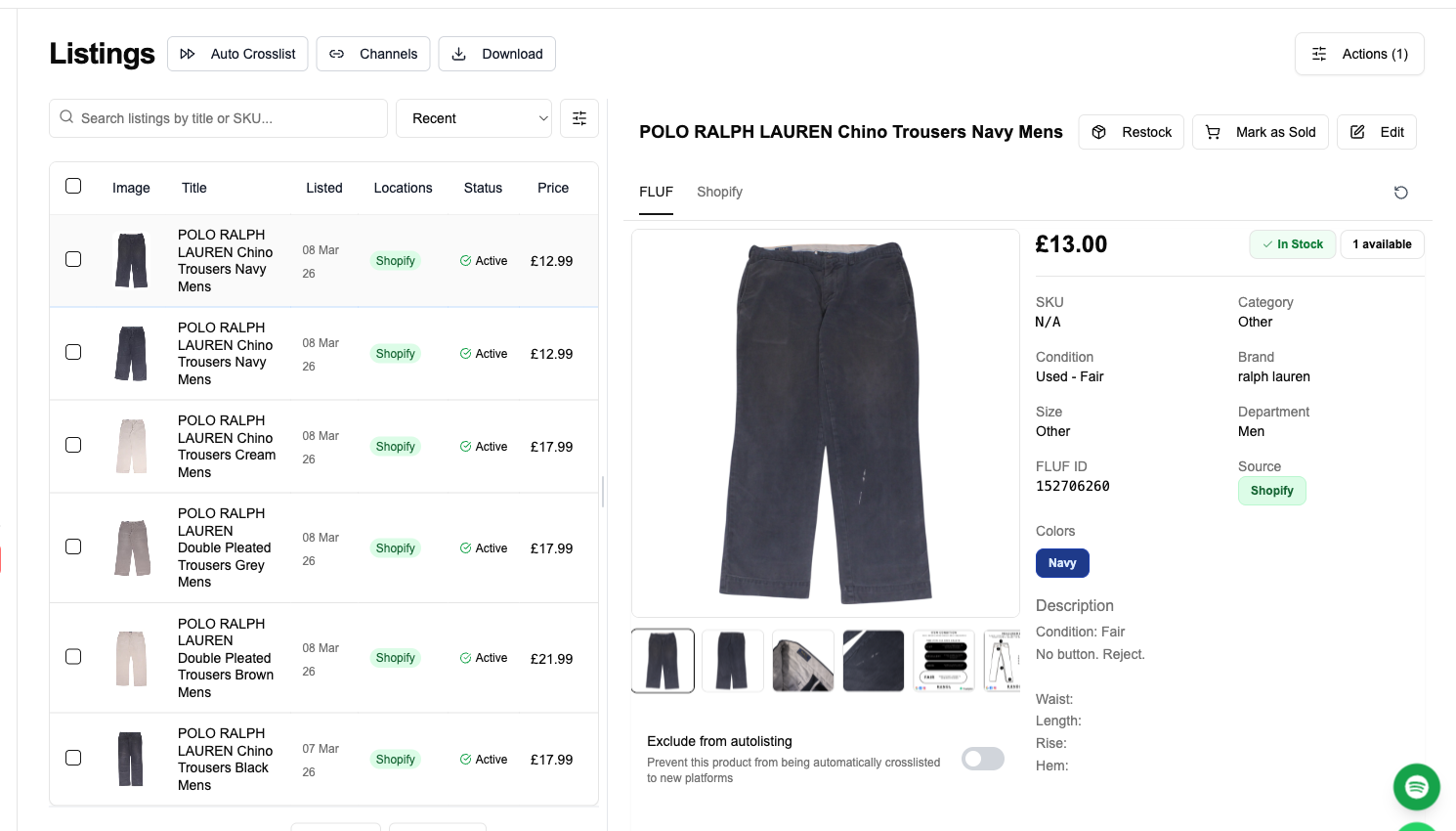
Step 3: offer it everywhere else. Select the listing in FLUF Connect and crosslist it to your other channels. Titles, photos, price and description carry across, and you can review each copy before it goes live. Every copy shares quantity one, so all of them point at the same single piece on your shelf.
That shared quantity is what stops double-selling. When a one-off piece sells on one marketplace, FLUF marks the copies on the other channels as sold, so a second buyer cannot pay for an item that is already gone. If stock moves where FLUF cannot see it, for instance a cash sale at an antiques fair, close that listing yourself on each channel. For the full picture of how shared quantities behave, see inventory sync.
What Stays Manual
Software never touches the stock, so the physical work stays yours. You collect lots from the saleroom, sort the mixed boxes, clean what can be cleaned, test electrics, wind watches, play records, and decide what goes to disposal. Condition grading is judgement that only eyes and hands can do, and the quality of that judgement sets your return rate.
Photography and measurement stay manual too. Estate pieces sell on trust, and trust comes from clear images of marks, hallmarks, labels, damage and scale. Weigh and measure parcels before you list so postage never eats the margin after the sale.
Some per-channel details need your review after crosslisting. Categories differ between marketplaces, postage options differ, and fashion sizes need converting for some audiences. FLUF carries the listing across and you approve the result, which takes seconds per copy rather than the minutes a fresh listing takes.
Paperwork is yours as well. Keep invoices from the auction house for every lot, record hammer prices and fees per piece, and keep those records for your tax return. If you clear houses for families rather than buying at public auction, confirm who holds the legal right to sell before anything is listed. GOV.UK explains probate, the legal right to deal with someone’s estate. Confirm it is in place before listing anything from it.
Who Estate-Auction Reselling With FLUF Is Not For
Skip FLUF if you sell whole lots straight on to trade buyers. A phone call and a van move that stock faster than any listing tool, and software adds nothing to a deal done in the car park.
Skip it if you want bidding, valuation and authentication handled for you. FLUF lists and syncs; it never tells you what to bid, what a piece is worth, or whether a watch is genuine. Those calls need a specialist or years of handling the goods.
Skip it if you only sell on a single marketplace. One channel means nothing to sync and nothing to crosslist, so the core value is absent. FLUF pays off from the second marketplace onward.
Finally, hold off listing any lot until ownership is settled. Family clearances during bereavement carry feelings that a quick listing can damage. Agree in writing who may sell what, wait for the legal right where one is needed, and treat the sensitivity as part of the job. Start from the solutions hub if you run a different kind of stock business and want to compare.
Pricing
| Plan | Monthly | Yearly | You save | Crosslisted products |
|---|---|---|---|---|
| Starter | £9/month | £59/year | 45% | Unlimited |
| Pro | £29/month | £199/year | 42% | Unlimited |
| Super Seller | Custom pricing — tell us what you need | Unlimited | ||
Automatic relisting, offer management, smart pricing and listing boosts are included from Pro upwards. Starter covers unlimited crosslisting, inventory sync, order sync and Instagram posting without them. Accounting integrations are included from Pro upwards. Yearly billing is charged once a year. New accounts get 7 days for £1, then move onto a plan.
7 days for £1, then from £9/monthNew sellers begin with a short paid trial, whose current terms appear above, then continue on a monthly or yearly plan. The lowest-priced plan covers crosslisting plus inventory and order sync with unlimited listings. Automatic relisting, offer handling and smart pricing come with Seller plans and above. Save 42% when you pay yearly
Sources and Verification
- Vinted: How it works: sellers pay no selling fees, buyers pay a protection fee of 5% plus £0.70, and sellers dispatch within 5 days. Verified September 2026.
- the-saleroom.com: auctioneer terms and conditions example: a buyer’s premium of 24% of hammer price plus VAT up to £150,000, with an added web fee for online bidding. Premiums vary by house; always read the sale terms.
- eBay UK seller help: selling fees: the official fee tables by category, which change over time, so confirm current rates before pricing a piece.
- GOV.UK: applying for probate: probate is the legal right to deal with someone’s estate. Verified September 2026.