Shopify vs Whatnot: Own Store or Live Auctions for Collectibles
A Shopify store lets you own customer data and avoid per-item fees, but you drive all traffic. Whatnot has built-in buyers for collectibles and trading cards, but you run live shows. Most resellers use both.
7 days for £1, then from £9/month.



- Shopify is your own branded store. You keep more per sale, but you bring your own buyers through ads, email, or social media.
- Whatnot is a live-auction marketplace. Buyers are already there, but you run weekly shows and the audience skews heavily to collectibles, trading cards and sneakers.
- Fees differ sharply: Shopify Basic is £25/month plus 1.6% card processing; Whatnot is 6.67% + VAT commission plus 2.42% + fixed fee + VAT processing, with no monthly plan.
- Many serious resellers use both: Whatnot for fast turnover on hot items via live shows, Shopify for repeat customers and slower-moving inventory.
This page compares two very different selling models: Shopify, where you own the store and drive your own traffic, and Whatnot, where buyers are already live-bidding and you perform. If you sell collectibles, trading cards, sneakers or vintage streetwear, both can work. If you sell other categories, Shopify is more flexible and Whatnot reaches a smaller audience. Most resellers who try one later add the other.
What you’re actually selling
On Shopify, you run a standalone e-commerce shop under your own brand and domain. Shopify hosts 5.5 million active shops across 175+ countries and processed $292 billion in sales in 2024. The buyer lands on your store through search, a link you share, social media, or an ad you paid for. You own every customer email, their browsing history, and their repeat-purchase data.
On Whatnot, you list items and then host live auctions in real time. You go live for 1–3 hour shows, typically running 30–60 second auctions per item while talking to viewers on camera. Whatnot says it generated more than $8 billion in GMV for 2025 and that buyers spend roughly 95 minutes daily in the app globally. Your audience is already watching, waiting to bid, and the platform surfaces you to them without you paying to drive traffic there.
The audience and what sells
Shopify’s traffic is whatever you send it. You decide the category, the price, the product positioning. If you list 1990s vintage band tees, craft beer, handmade jewellery, or home décor, your shop is as valid as anyone else’s. You are not limited to collectibles or live formats.
Whatnot’s built-in buyers are heavily skewed to collecting: sports cards and trading card games dominate (Whatnot says roughly 6.4 million sports cards sell monthly). Sneakers, vintage fashion, comics, graded memorabilia and electronics also move quickly. The platform rewards shows that run on a predictable schedule; Whatnot says successful sellers typically go live 2–3 times per week. If you sell collectibles and enjoy performing on camera, Whatnot’s pre-warmed audience is a huge advantage. If you sell home goods or new retail stock, the audience is much smaller.
Fees and payouts
Shopify UK (as of 2026): Basic plan costs £25 per month on monthly billing, or £19 when billed annually. Card processing through Shopify Payments is 1.6% per transaction with no additional commission. Higher plans (Grow, Advanced) reduce card fees to 1.6% and 1.5% respectively. There are no listing fees, no final-value fees, no monthly caps on what you sell.
Whatnot UK (as of 2026): Whatnot charges approximately 6.67% commission plus VAT and 2.42% + a fixed fee for payment processing, also with VAT. There are no listing fees and no monthly subscription. Free shipping labels are provided via Royal Mail or DPD within supported countries.
Worked example: a £40 collectible (sports card, vintage sneaker)
On Shopify Basic (£25/month), assuming you average 2 sales per day:
- Shopify card fee: 1.6% of £40 = £0.64
- Your gross: £39.36 (monthly plan cost is pro-rated across all sales, so a low-volume month still costs the £25)
On Whatnot UK:
- Commission: 6.67% + VAT = ~8% = £3.20
- Payment processing: 2.42% + fixed fee + VAT ≈ 3% = £1.20
- Your gross: £35.60
- Free shipping label (you print and post)
Shopify wins on fees per item, but Whatnot requires you to run live shows and the audience is there waiting. Shopify requires you to drive traffic (paid ads, email, SEO) and those costs are separate from the plan price.
Effort and logistics
Shopify: You design your shop, upload product photos and descriptions, set up payment and shipping, then market. Traffic is entirely on you. You handle every sale’s fulfilment (packing, label printing, posting). You need email marketing, social-media posts, possibly paid ads on Google or Instagram. If you list 100 items and sell 2 per week, the other 98 are working 24/7 without your presence.
Whatnot: You format items for the live show (title, price range, thumbnail photo), go live on your show day, present items on camera, answer questions from viewers in real time, and run the auction. Buyers bid against each other. You then pack and ship the sold items using the free prepaid label. This is real-time entertainment; you cannot automate it. Whatnot rewards sellers who go live on the same day and time each week, building a returning audience faster.
Building a strategy with both
Serious multi-channel resellers often use both, not either/or. A typical split:
- Whatnot: Fast turnover on hot items: new sneaker releases, high-demand trading cards, limited-edition collectibles. Live shows create FOMO (fear of missing out) and rapid bidding. Payouts can arrive within 48–96 hours of a sale.
- Shopify: Slower-moving inventory, repeat customers, full-price items that don’t fit Whatnot’s auction format, and lower-velocity stock you want to drip-feed over months. Your customer list becomes a marketing asset: email them new arrivals, restocks, or sales.
Many resellers who start on Whatnot later add Shopify because they hit a ceiling on how much they can sell live each week. Those who start with Shopify often add Whatnot because the audience for collectibles is simply larger and more engaged there than they can build from cold-traffic ads.
Using FLUF Connect with both
| Capability | Shopify | Whatnot |
|---|---|---|
| Connect your account | Yes, from Channels | Yes, with the FLUF browser extension or FLUF mobile app |
| List stock | FLUF syncs your Shopify catalogue to your other channels | FLUF lists items from your inventory on Whatnot |
| Item sells on Shopify | FLUF sees the order and ends listings on Whatnot and other channels | Not applicable |
| Item sells on Whatnot | FLUF sees the sale and removes the Shopify listing | FLUF sees the sale and ends listings everywhere else |
| Relisting or offer management | Not on Shopify | Not on Whatnot |
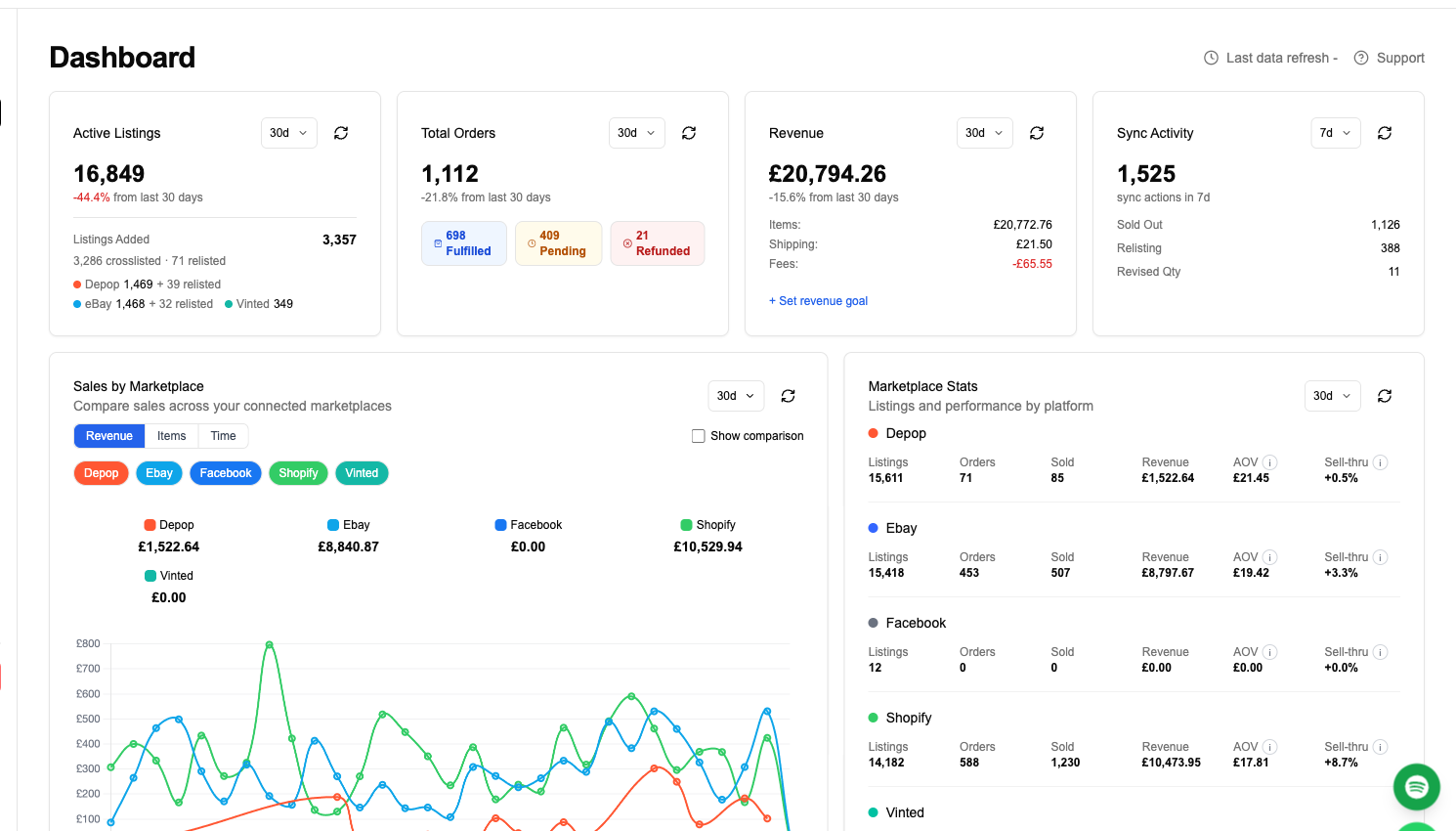
FLUF Connect lists your Shopify and Whatnot inventory together, preventing the same piece from being sold twice. When a buyer purchases from one channel, FLUF automatically takes down that listing everywhere else. This avoids the costly mistake of accepting two orders for a single collectible.
What FLUF Connect costs
FLUF Connect is 7 days for £1, then from £9/month. Crosslisting and inventory sync are on every plan. Relisting and offer management are not available on Shopify or Whatnot, but they are available on other channels. Your Shopify and Whatnot fees are separate from your FLUF plan.
| Plan | Monthly | Crosslisted products |
|---|---|---|
| Starter | £9/month | Unlimited |
| Pro | £29/month | Unlimited |
| Super Seller | Custom pricing — tell us what you need | Unlimited |
Related guides
- How to sell on Shopify
- How to sell on Whatnot
- eBay vs Whatnot
- Shopify vs Amazon
- Multi-channel selling and inventory sync
Sources
- Shopify UK: pricing and payment processing rates
- Whatnot UK: seller fees and commission
- Whatnot: platform overview and statistics
- Shopify: e-commerce platform
Checked October 2026.
Frequently Asked Questions
It depends on what you sell and how you like to work. Shopify suits any category and passive 24/7 selling, but you pay for traffic. Whatnot is built for collectibles, trading cards and sneakers, and the audience is ready to bid, but you run live shows. Many resellers use both.
No. Whatnot charges commission (6.67% + VAT) and payment processing (2.42% + fixed fee + VAT) per sale, with no monthly subscription. Shopify charges a monthly plan (starting £19–£25 in the UK) plus card processing fees per transaction.
Yes, Whatnot accepts new items in some categories like electronics. But the audience is heavily skewed to collectibles, trading cards and sneakers. New retail stock typically finds a larger audience on eBay or Amazon.
Yes. Whatnot is built around live-auction shows. You list the item, go live at your scheduled show time, present it on camera, and run a timed auction while interacting with viewers. You cannot automate this.
With FLUF Connect, when an item sells on Shopify, FLUF automatically removes the listing from Whatnot and your other channels. This prevents you from overselling the same piece.
On a £40 sale, Shopify costs roughly £0.64 in card fees (assuming you have a Basic plan and steady sales). Whatnot costs roughly £4.40 in commission and payment processing. Shopify's advantage assumes you're selling regularly; a quiet month still costs the £25 plan fee.
Yes. FLUF Connect connects both platforms and prevents overselling. When an item sells on one channel, FLUF removes it from all others. You list once and keep stock in step across both channels.
Whatnot. The platform has a built-in community of buyers hunting collectibles, trading cards, sneakers and vintage fashion. They spend roughly 95 minutes daily in the app, and 6.4 million sports cards sell each month. Shopify's audience is whatever traffic you drive to it.