How to Sell Sneakers on Whatnot — The Complete Guide for 2026
Jordans, Dunks, Yeezys, New Balance — how to sell sneakers on the largest live-auction platform. Fees, authentication, market trends, sourcing, and crosslisting.



Key Takeaways
- Sneakers are one of Whatnot’s fastest-growing categories — 30% of live sellers offer sneakers, and the global sneaker resale market is projected to reach $51 billion by 2032. Whatnot gives sneaker sellers access to thousands of buyers in a single live show.
- The resale market is shifting in 2026 — profit margins have compressed from 100% per pair (2020–2021 peak) to 10–25% today. Only 47% of new releases trade above retail. Volume and community matter more than ever.
- Whatnot fees are competitive — 8% commission + 2.9% + $0.30 processing (~11% effective). Compare to eBay’s 13.25% for most sneaker categories, or StockX/GOAT where fees are baked into the spread.
- Authentication is seller-responsible — unlike StockX (mandatory) or eBay UK (mandatory above £200), Whatnot does not authenticate sneakers itself. The live video format lets you demonstrate authenticity on camera. Counterfeits are strictly prohibited with zero tolerance enforcement.
- Live show formats move volume — singles auctions, themed nights (“All Jordan 1s”), $1-start auctions, and Surprise Sets (minimum $50/item for sneakers). One Whatnot sneaker store crossed $1M monthly sales across 3 channels.
- Cross-list with FLUF Connect — sync your sneaker inventory with eBay, Depop, Vinted, and Shopify so a live-show sale delists everywhere else. Get started free.
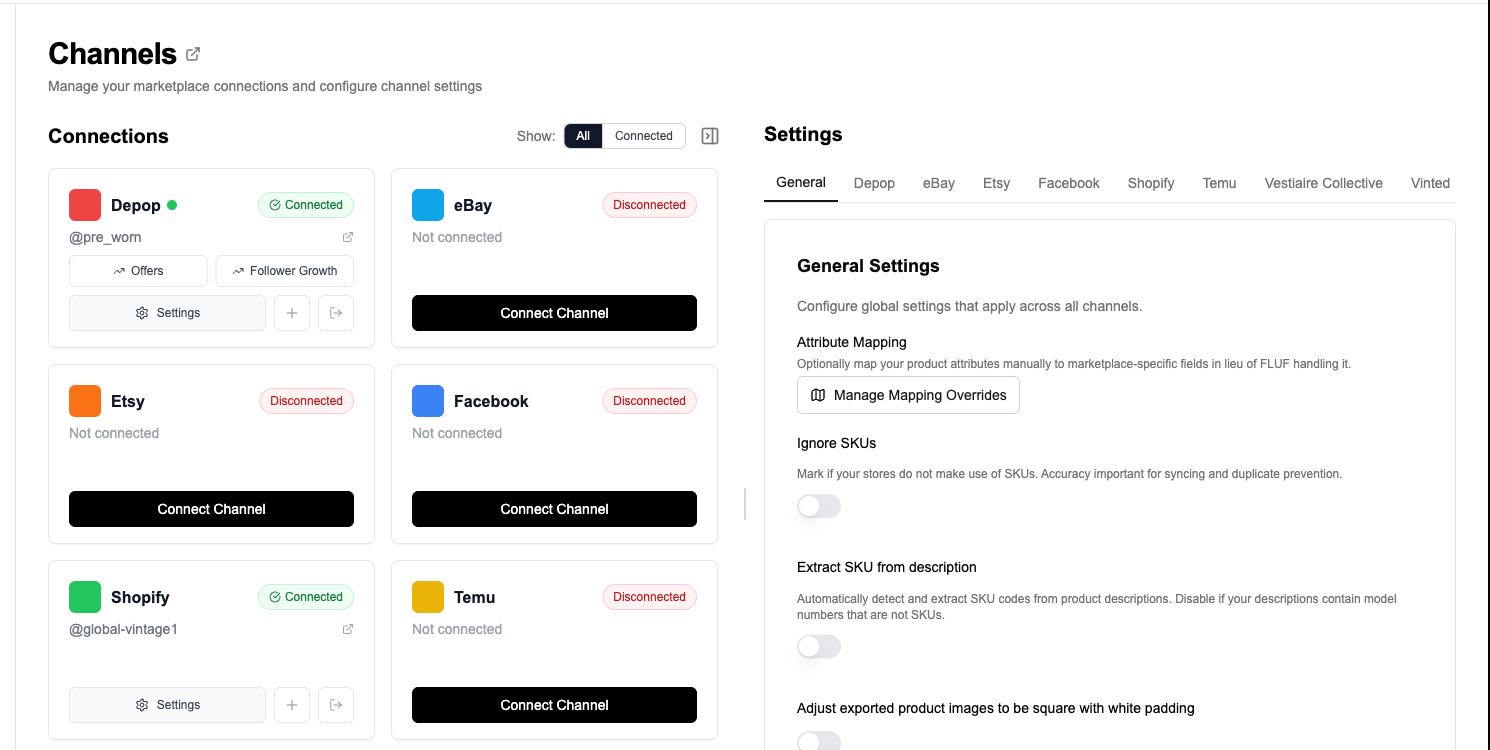
Table of Contents
- Why Sell Sneakers on Whatnot?
- The Sneaker Resale Market in 2026
- Whatnot Fees vs eBay vs StockX vs GOAT
- Live Show Formats for Sneakers
- Authentication on Whatnot
- Pricing Strategy
- What Sneakers Sell Best on Whatnot
- Where to Source Sneaker Inventory
- Presentation Tips
- UK Sneaker Market on Whatnot
- Common Mistakes Sneaker Sellers Make
- Cross-List with FLUF Connect
- FAQ
Why Sell Sneakers on Whatnot?
The sneaker resale market has changed. The days of buying a pair on Nike SNKRS and flipping it for double are mostly over — profit margins have compressed from 100% per pair in 2020–2021 to 10–25% in 2026, and only 47% of new releases trade above retail. In this environment, the sellers who win are the ones who move volume fast and build a loyal buyer community. That is exactly what Whatnot’s live format enables.
A well-run Whatnot sneaker show can sell 50–150+ pairs in a single 2–3 hour session. Circle City OC — one of Whatnot’s top sneaker/streetwear operations — was the first seller to cross $1 million in monthly sales across three Whatnot channels. Their co-founders described the platform as “a free-for-all — like the Wild, Wild West” in terms of opportunity. Another Whatnot sneaker seller, ZKStyles (Zoreen Kabani), left finance to sell full-time and earned $1.3 million on the platform.
Whatnot works for sneakers because the live format solves two problems that static platforms cannot: trust (buyers watch you handle and present each pair on camera, which is the live equivalent of authentication) and urgency (a 30-second auction with 5 bidders creates FOMO that a static listing never will). The platform is not right for every sneaker seller — if you want passive, set-and-forget listings, eBay or StockX is a better fit. But if you can present on camera and run a show, Whatnot accelerates everything.
The Sneaker Resale Market in 2026
The global sneaker resale market is valued at roughly $10.6 billion and projected to reach $51.2 billion by 2032 (16.4% CAGR). But beneath those headline numbers, the market is going through a painful correction that every Whatnot sneaker seller needs to understand.
What happened
- Nike overproduction flooded the market with product that used to be limited. Dunks, Jordan 1s, and Air Force 1s that once commanded 2x retail are now sitting at or below retail on resale platforms.
- Bot crackdowns at retailers reduced the arbitrage opportunities that powered the 2020–2021 resale boom.
- Margin compression: in 2020, 58% of new releases traded above retail on secondary platforms. By 2024–2025, only 47% do. Profit margins per pair have dropped from 100% to 10–25%.
- NPR January 2026 headline: “The resale market for sneakers is tanking. Is 2026 the end of the sneakerhead era?”
What is still working
- Truly limited releases still command premiums: Travis Scott collabs, Off-White remaining stock, select New Balance collabs
- Vintage and used sneakers: pre-owned market growing as new resale margins shrink. Used Jordan 1s and vintage Air Max are thriving.
- Volume-based businesses: sellers who move 100+ pairs per week at 10–15% margin per pair outperform sellers chasing one big flip per month
- Community-driven selling on Whatnot: loyal audiences who return weekly, bid competitively, and provide predictable revenue regardless of market conditions
Recovery signs
Nike and Jordan average resale prices are up 5–6% year-on-year as of late 2025, suggesting the market is stabilising after the correction. Whatnot’s sneaker category continues to grow as sellers shift from StockX-style passive listings to community-driven live shows where the relationship with the buyer — not just the product — drives revenue.
Whatnot Fees vs eBay vs StockX vs GOAT
| Platform | Seller Fee | Authentication | Notes |
|---|---|---|---|
| Whatnot (US) | 8% + 2.9% + $0.30 (~11%) | Seller-responsible (no platform auth) | Free shipping labels. No listing fees. Live auction format. |
| Whatnot (UK) | 6.67% + VAT + 2.42% + VAT + £0.25 + VAT (~12%) | Seller-responsible | Royal Mail/DPD labels provided free. |
| eBay UK (trainers £200+) | ~5% + 30p FVF (with Authenticity Guarantee) | Mandatory third-party auth above £200 | Significantly cheaper on high-value trainers. Auth adds trust. |
| eBay UK (trainers under £200) | 11.9–12.8% FVF | Optional (£10 add-on from £75) | Standard eBay fee rates apply. |
| StockX | ~9–12% (varies by seller level) | Mandatory — every pair authenticated | Blind auction. No seller-buyer interaction. Real-time price tracking. |
| GOAT | ~9.5–15% (varies by seller level) | Mandatory — AI + physical inspection | Supports used sneakers (unlike StockX). Higher fees for new sellers. |
- Whatnot: Commission ~£9.60, processing ~£3.20. Total fees: ~£12.80 (~10.7%). You keep: ~£107.20.
- eBay (under £200, business): FVF 11.9% × £123.50 = £14.70 + 30p. You keep: ~£108.50.
- StockX: ~10% = £12.00 + shipping. You keep: ~£105–108.
Whatnot and eBay are comparable on mid-range sneakers. eBay becomes significantly cheaper above £200 (5% FVF with Authenticity Guarantee). Whatnot’s advantage is speed and community, not fees alone.
Live Show Formats for Sneakers
| Format | How It Works | Best For |
|---|---|---|
| Singles auctions | Hold up each pair, describe condition, size, colourway. Start auction at $1–5, 15–60 seconds per pair. | Most common format. Works for any sneaker at any price point. |
| Themed nights | “All Jordan 1s,” “Nike Dunk Night,” “Deadstock Only,” “Used Heaters.” Themed shows attract targeted audiences. | Building a following around a specific niche. Drives pre-show promotion. |
| $1 start auctions | Start every pair at $1 and let bidding determine the price. Creates immediate engagement and FOMO. | Moving volume and building new audiences. Risk: low-attendance shows = $1 final prices. |
| Surprise Sets | Curated groups where each buyer gets a random pair from a disclosed checklist. Sneaker Surprise Sets require each item valued above $50. | Moving mid-tier inventory in bundles. Requires Whatnot pre-approval and full checklist disclosure. |
| Live unboxing | Open sealed boxes from a recent drop on camera. Show the shoe, confirm deadstock, start the auction. | Drop-day content. High engagement if the shoe is hyped. |
Pacing matters: the best sneaker shows keep the energy high with a pair every 60–90 seconds. Pause too long between auctions and viewers leave. Mix high-value “hero” pairs with affordable beaters to maintain bidding across price tiers.
Authentication on Whatnot
Whatnot does not authenticate sneakers itself — this is the most important policy difference from StockX and GOAT, where every pair passes through authentication before reaching the buyer. On Whatnot, sellers bear full responsibility for authenticity. If a buyer receives a counterfeit pair, the seller faces chargebacks, suspension, or permanent ban under Whatnot’s zero-tolerance counterfeit policy.
How sellers build trust without platform authentication
- Live demonstration on camera — show the box, the shoe from all angles, the insole, the stitching, the tongue tag, and any receipts or proof of purchase. The live video itself is a form of authentication.
- Third-party authenticators — Whatnot recommends Entrupy, LegitApp, and CheckCheck. Pre-authenticating valuable pairs before going live adds trust and justifies higher bids.
- Receipts and proof of purchase — show on camera. SNKRS screenshots, retailer receipts, and consignment tags all build buyer confidence.
- Reputation over time — established sellers with hundreds of positive reviews rarely face authentication challenges. The 100% money-back buyer protection guarantee means buyers take less risk.
For sellers concerned about the authentication gap, consider listing high-value pairs (above £200) on eBay UK with Authenticity Guarantee for the added trust layer, and using Whatnot for mid-range and used pairs where the live-show trust model is sufficient. FLUF Connect syncs inventory across both platforms.
Pricing Strategy
New / deadstock sneakers
Check StockX, GOAT, and eBay sold listings for current market price. On Whatnot, start auctions at $1–5 for pairs under $200 and $15–25 for pairs above $200. Well-attended shows regularly push final prices to or above StockX market. Low-attendance shows will not — know your audience size and adjust expectations.
Used / pre-owned sneakers
Used sneakers are one of Whatnot’s growing advantages. StockX does not accept used pairs. GOAT does, but charges higher fees. On Whatnot, you can show the condition live — scuffs, sole wear, yellowing — and let the buyer decide. Be radically transparent about condition on camera. “These are 7/10 condition, worn twice, sole drag on the left toe” builds trust and reduces returns.
The volume game
In a compressed-margin market, the winning strategy is volume. A seller making £15 profit per pair who moves 100 pairs per week earns £1,500/week — £78,000/year. That requires consistent shows, strong sourcing, and a loyal audience. The per-pair margin is thin, but the volume throughput of a live Whatnot show makes it work where static platforms struggle.
What Sneakers Sell Best on Whatnot
| Category | Examples | Whatnot Performance |
|---|---|---|
| Jordan 1s | OG colourways, Travis Scott collabs, Retro High releases | Strongest single sneaker model on the platform. Always draws bidders. |
| Nike Dunks | Low and High, SB collabs, vintage Dunks | Post-hype correction but still a volume driver. Low-end pairs move fast at $1 starts. |
| New Balance collabs | 550s, 990v6, JJJJound, Aime Leon Dore | Growing rapidly. NB’s premium positioning attracts buyers willing to pay above retail. |
| Yeezy | 350 V2, Slides, Foam Runners | Post-Kanye correction, but iconic colourways (Beluga, Zebra) retain value. |
| Vintage runners | 90s Air Max, vintage Asics (Gel-Lyte III), vintage Saucony | Niche but passionate audience. Asics up 45% YoY. Less competition from other sellers. |
| Used / beater sneakers | Worn Jordan 1s, beater Dunks, used Air Force 1s | Growing category as new-sneaker margins compress. Honesty about condition drives trust. |
Where to Source Sneaker Inventory
| Source | Cost | Best For |
|---|---|---|
| Nike SNKRS / retailer raffles | Retail | Hyped releases for above-retail resale. Low odds but free to enter. |
| Nike Factory Store / adidas outlets | Below retail (30–50% off) | End-of-season markdowns. Volume sourcing for mid-tier pairs. |
| Consignment shops | Market price minus consignment cut | Curated inventory without sourcing effort. Flight Club, Stadium Goods, local shops. |
| Other resale platforms | Market price | Buying underpriced pairs on eBay, Depop, Facebook Marketplace for Whatnot resale. |
| Thrift stores / charity shops | £1–10/pair | Vintage and used pairs for low-cost, high-margin resale. Requires knowledge to spot gems. |
| Bulk / wholesale lots | Below market per unit | Liquidation and overstock. Variable quality — inspect before buying. |
| In-store boutique releases | Retail | Limited allocations at independent sneaker shops. Relationship-dependent. |
Presentation Tips
- Show every angle — top, sides, heel, sole, tongue tag, insole, box label. Buyers bidding $200+ on a live stream need to see everything they would see in-hand.
- Call out the details — colourway name, style code, size, year, condition rating (DS, VNDS, 9/10, etc.). Knowledge drives bids.
- Be transparent about flaws — yellowing, sole separation, creasing, box damage. Point out every flaw on camera. Buyers who feel surprised after delivery leave negative reviews and file returns.
- Good lighting — diffused overhead light. Avoid harsh shadows that obscure colour accuracy. Test with a white sneaker before going live — white should look white, not yellow.
- Clean before selling — a quick wipe-down with a sneaker cleaning solution (Crep Protect, Jason Markk, or Whatnot’s own Re:soled kits via Sneaky) makes a visible difference on camera and in perceived value.
- Pair presentation with personality — the sellers who earn repeat buyers are the ones who tell a story with each pair. “These are the 2015 Chicago 1s, the OG colourway, still deadstock — look at that leather crease-free” beats “next up, Jordan 1s.”
UK Sneaker Market on Whatnot
Whatnot has actively invested in its UK sneaker category. In August 2024, the platform partnered with London-based collector “Kish Kash” for a livestream auction from his 2,000-piece sneaker collection, with proceeds benefiting Breast Cancer Now. Whatnot’s UK General Manager Daniel Fisher noted: “Our love of sneakers has been in full force from when the craze originated in the 1980s — it is a budding micro-industry that is growing because of the passion.”
UK-relevant sneaker brands and models
- Nike — Jordan 1s, Dunks, Air Max 90/95/97. The core of any UK sneaker show.
- adidas — Sambas and Gazelles (massive UK resurgence), Yeezy remaining stock, Spezial
- New Balance — 550, 327, 990 series. Growing fastest among UK sneakerheads (+45% YoY for Asics and NB combined).
- Asics — Gel-Lyte III, Gel-Kayano. Surging in the UK market.
UK fee note
UK Whatnot fees are higher than US: 6.67% + VAT commission + 2.42% + VAT processing + £0.25 + VAT per order (~12% effective). For trainers above £200, eBay UK’s Authenticity Guarantee rate (5% + 30p) is significantly cheaper. Consider using eBay for high-value authenticated pairs and Whatnot for mid-range and used pairs where the live-show format adds value. FLUF Connect keeps inventory synced across both.
Common Mistakes Sneaker Sellers Make on Whatnot
- Ignoring the market correction — sourcing at 2021 resale prices when margins have compressed to 10–25%. Know your current comps on StockX/eBay before buying inventory.
- No authentication evidence — selling expensive pairs without showing receipts, tags, or third-party authentication on camera. Buyer trust is everything when platform auth is absent.
- Starting auctions at market price — kills bidding momentum. Start at $1–5 and trust the market.
- Not disclosing condition honestly — hiding scuffs, yellowing, or sole wear leads to returns and negative reviews. Radical transparency sells more than deception.
- Selling only hyped releases — the hyped-release resale market is crowded and margin-thin. Diversify into used sneakers, vintage runners, and less competitive models.
- Not cleaning pairs before showing — a dirty sole or dusty midsole on camera reduces perceived value by 20–30%. Two minutes of cleaning = higher final bids.
- No inventory sync across platforms — selling the same pair on Whatnot, eBay, and Depop without inventory sync guarantees overselling. Use FLUF Connect.
Cross-List with FLUF Connect
Most serious sneaker sellers list on multiple platforms — Whatnot for live shows, eBay for search-driven passive sales, Depop for the streetwear audience, Vinted for the fashion-focused EU buyer base. The critical requirement is inventory sync: when a pair sells on Whatnot during a live show, it must delist from every other channel immediately.
FLUF Connect handles this automatically. Connect your Whatnot, eBay, Depop, Vinted, Shopify, and Facebook Marketplace accounts. When a sale happens on any channel, FLUF Connect syncs stock across all connected platforms in real time.
Selling sneakers on Whatnot, eBay, and Depop? FLUF Connect syncs your inventory in real time — a live-show sale delists from every other channel instantly.
Frequently Asked Questions
Does Whatnot authenticate sneakers?
No. Unlike StockX or GOAT, Whatnot does not authenticate sneakers itself. Sellers are responsible for ensuring authenticity. Counterfeits are strictly prohibited with zero-tolerance enforcement. Third-party authenticators (Entrupy, LegitApp, CheckCheck) are recommended for high-value pairs.
What sneaker fees does Whatnot charge?
US: 8% commission + 2.9% + $0.30 processing (~11%). UK: 6.67% + VAT + 2.42% + VAT + £0.25 + VAT (~12%). No listing fees. Free shipping labels. For trainers above £200, eBay UK with Authenticity Guarantee charges only 5% + 30p.
Is sneaker reselling still profitable in 2026?
Yes, but margins have compressed. The days of 100% flips are mostly over. Profitable sneaker selling in 2026 requires volume, strong sourcing (outlets, thrift, bulk), community building on live platforms like Whatnot, and diversification across used and vintage sneakers alongside new releases.
What sneakers sell best on Whatnot?
Jordan 1s (strongest single model), Nike Dunks, New Balance collabs, Yeezy, and vintage runners (Asics, Saucony). Used/pre-owned sneakers are a growing category as new-release margins compress.
Can I sell used sneakers on Whatnot?
Yes. Unlike StockX (new only), Whatnot supports used and pre-owned sneakers. Be transparent about condition on camera — scuffs, sole wear, yellowing. Used sneakers are one of the platform’s fastest-growing categories.
Can I sync my sneaker listings across Whatnot, eBay, and Depop?
Yes. FLUF Connect supports all three (plus Vinted, Shopify, and Facebook Marketplace) with real-time inventory sync.
Explore more: Trading Cards | Sports Cards | Pokémon Cards | Funko Pops | Vintage Clothing. Or read the full How to Sell on Whatnot guide.
Frequently Asked Questions
No. Whatnot does not authenticate sneakers itself unlike StockX or GOAT. Sellers are responsible for ensuring authenticity. Third-party authenticators like Entrupy, LegitApp, and CheckCheck are recommended for high-value pairs.
US: 8% commission plus 2.9% plus $0.30 processing, roughly 11%. UK: around 12% including VAT. No listing fees. Free shipping labels. eBay UK Authenticity Guarantee charges only 5% plus 30p for trainers above 200 pounds.
Yes, but margins have compressed from 100% per pair to 10-25%. Profitable sneaker selling requires volume, strong sourcing, community building on live platforms, and diversification into used and vintage sneakers.
Jordan 1s are the strongest single model. Nike Dunks, New Balance collabs, Yeezy, and vintage runners including Asics and Saucony also perform well. Used and pre-owned sneakers are a growing category.
Yes. Unlike StockX which only accepts new, Whatnot supports used and pre-owned sneakers. Be transparent about condition on camera. Used sneakers are one of the fastest-growing categories on the platform.
Yes. FLUF Connect supports Whatnot, eBay, Depop, Vinted, Shopify, and Facebook Marketplace with real-time inventory sync.