



Yes, FLUF Connect fits house clearance operators who resell the contents they clear. You photograph each keep-to-sell item once, offer it on several marketplaces together, and when it sells in one place it comes down everywhere else. It fits badly if you clear one property a year or sell everything to a single trade buyer.
Clearance work differs from every other sourcing method in this series. The stock finds you. A family, landlord or executor pays a clearance fee, hands over the keys, and sets a deadline tied to an exchange date, a tenancy turnaround or a sale. You sort the property into sell, donate, recycle and tip runs, and whatever the resale pile earns lifts the margin on the job. Van space and storage decide each day more than anything you read online, because bulky pieces must move before the deadline whether buyers have appeared or not.
Key Takeaways
- Clearance jobs pay a fee first, and resale of the contents lifts the margin on top.
- Heavy furniture moves quickest as collection-only listings on Facebook Marketplace and eBay.
- Pocket-sized valuables reach further on eBay, Etsy, Depop and Vinted.
- A single FLUF entry can show one item on each of your channels at quantity one.
- Each sale clears the item from the other channels, so nothing sells twice.
- Sorting, testing, photography, waste paperwork and buyer messages remain your work.
Is FLUF Connect Right for House Clearance Stock?
It fits when three things hold: you clear properties regularly, you sell on at least two marketplaces, and most pieces are one of a kind. That shape describes most clearance operators. Each sideboard, mower and box of vinyl exists once, so every listing is bespoke and every double sale means a refund plus a damaged review record. FLUF Connect exists for that pattern: create the listing a single time, show it on several channels together, and let shared stock counts close the other copies the moment one sells.
Speed matters more here than in any sibling trade. Estate-auction buyers sort at leisure in their own units, as the auction houses page assumes for its operators. You sort against a key-return date. Listing bulky pieces on Facebook Marketplace and eBay while still at the property means enquiries arrive before you unload the van, and collection-only sales can clear the van without the pieces ever reaching your storage. Small valuables ride along in boxes and get photographed that evening for eBay, Etsy, Depop and Vinted.
The cost test is time per property. If sorting, photographing and writing up one clearance takes a full day and you run six jobs a month, listing labour is a second full-time workload hiding inside the business. Writing each piece up once and reviewing its channel copies recovers most of that day. Operators who clear a single family home a year will never feel the saving, which is why this page keeps steering occasional clearers toward a direct listing on one marketplace.
What Sells Best From a House Clearance
Furniture pays the van fuel when you pick correctly. Solid-wood and mid-century pieces, from sideboards to Ercol-style chairs, draw steady search demand and survive a van ride. Flat-pack wardrobes and tired mattresses rarely earn their floor space, so price those to move fast or send them to the recycling run. List large pieces collection-only on Facebook Marketplace and eBay, where local buyers filter by distance and bring their own transport.
Tested tools and garden machinery form the second pile. Mowers, drills, washers and bikes sell well once shown working, with a short video or a photo of the running display doing more than any paragraph. Untested electrics need a safety check before they list. If you cannot confirm an appliance is safe, it belongs on the tip run rather than on a marketplace.
Small valuables carry the best margin per shelf inch. Jewellery, watches, vinyl records, film cameras, quality ceramics and first-edition books all have deep buyer pools searching daily, and they post cheaply. Branded clothing in good order bundles well for Depop and Vinted, where single-quantity fashion finds move quickly. Measure garments and state flaws plainly, since condition-led descriptions cut the message threads asking for extra pictures.
Two checks precede every listing. First, search drawers, pockets, lofts and sheds for cash, documents, photographs and sentimental items, and hand those to the family before anything is sold. Second, agree in writing who holds the right to sell the contents, and where a bereavement is involved confirm the legal position before listing. GOV.UK notes probate is the legal right to deal with what someone owned, and advises against putting property on the market before it is granted.
How It Works With FLUF Connect in Three Steps
1. Connect your sales channels
Link the marketplaces you sell on from one dashboard. Depop, eBay, Etsy and Shopify connect directly; Vinted, Facebook Marketplace and similar channels list through the free FLUF Chrome extension, so install it and keep it connected while you work. Each connection takes a few minutes and happens once, then stays ready for every future job.
2. Describe each piece once
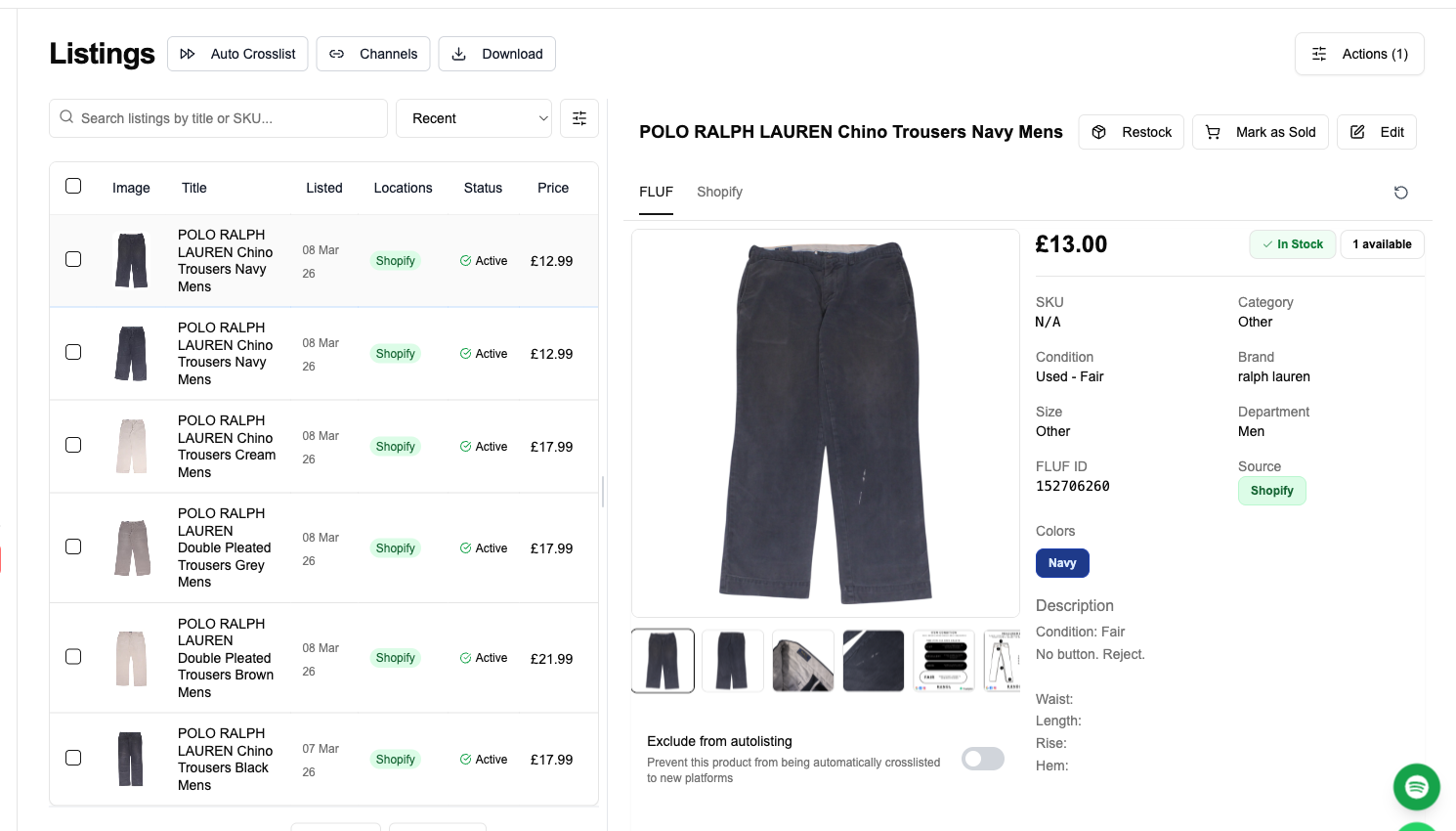
Photograph the item on your phone, grade its condition, add measurements and note every flaw. Clearance photography can happen at the property for bulky pieces and at home for valuables, and the listing follows the item. Set quantity one, choose the price per channel, and review how the copy reads on each marketplace before it goes live.
3. Publish everywhere and let sales sync
Push the listing live on all chosen channels together. A sideboard can sit on Facebook Marketplace for local collectors and on eBay for national buyers at the same time, while a watch from the same property appears on eBay, Etsy, Depop and Vinted. When any copy sells, FLUF Connect removes the rest, so a quantity-one piece cannot sell twice. Higher-tier plans add automatic relisting of stale listings and automatic handling of incoming offers, while every plan includes crosslisting, inventory sync and order sync.
Listing, Sync and Oversell Prevention
One-off stock is the riskiest inventory to sell on several sites at once, because no second unit covers a double sale. The table below shows what FLUF Connect handles and what it asks of you.
| Task | What FLUF Connect does | What you do |
|---|---|---|
| Listing creation | Holds one master listing with your photos, title and condition notes | Photograph each piece and write a plain account of its condition |
| Publishing | Places that listing on each channel you select at the same time | Review the copy per channel and set per-channel prices |
| Oversell prevention | Takes the listing down elsewhere once it sells on one channel | Delist by hand on any channel where sale detection is not supported |
| Same-day bulky sales | Keeps the Facebook Marketplace and eBay copies pointed at one item | Answer collection enquiries fast and mark items collected promptly |
| Orders | Gathers marketplace orders together with inventory and order sync on every plan | Pick, pack and dispatch, then arrange collections with buyers |
| Relisting and offers | Automatic relisting and offer handling are included from Seller plan level upwards | Choose which listings and offer rules the automation should cover |
The honest caveat sits in the third row. Where a channel does not report sales back, no tool can close the copy for you, so check that channel and delist by hand. Saying this plainly matters more than the feature list: a double-sold sideboard costs a refund, a wasted buyer journey and a review hit that dwarf the minutes a manual check takes.
What Stays Manual
FLUF Connect starts working after a piece is sorted for sale. Everything before that point stays yours: quoting jobs, shifting furniture, sweeping lofts, running tip and donation loads, and meeting the key-return date. Sorting judgement stays human too. Only eyes and hands can tell a sellable chair from firewood, and the quality of that call sets the margin on the job.
Waste paperwork sits with you as well. In England a business that carries waste must register as a waste carrier, and operating unregistered risks an unlimited fine; GOV.UK sets out the registration routes, including a usually free tier for businesses carrying only waste they produce themselves. Keep transfer notes for every load that leaves a property, and confirm your position where anything unusual turns up.
Photography, condition grading and pricing judgement stay manual. A crosslisting tool cannot see the wobble in a chair leg, so camera work and the first line of the description decide whether buyers trust the listing. Buyer messages, haggling, returns and courier claims remain personal too. A quick, polite reply rescues feedback that software cannot rescue for you.
Who It Is Not For
Skip FLUF, or at least skip it for now, if any of these describe you. One-property clearers handling a single family home will spend longer setting up channels than the saving repays, so list directly on one marketplace instead. Operators who pass every load to a trade buyer need a phone and a van rather than a listing dashboard. Sellers active on only one channel have nothing to sync, so the core value is absent until a second marketplace joins.
Pass as well if you lack storage or transport, since clearance deadlines do not wait for a hired van next month. Businesses needing full warehouse management should look at dedicated warehouse software. Anyone hoping software will quote jobs, carry furniture, test appliances or grade stock is shopping for staff rather than software. And anyone wanting an unpaid tier should look elsewhere, since every FLUF plan is paid and the trial itself asks for a card up front.
Pricing
7 days for £1, then from £9/month| Plan | Monthly | Yearly | You save | Crosslisted products |
|---|---|---|---|---|
| Starter | £9/month | £59/year | 45% | Unlimited |
| Pro | £29/month | £199/year | 42% | Unlimited |
| Super Seller | Custom pricing — tell us what you need | Unlimited | ||
Automatic relisting, offer management, smart pricing and listing boosts are included from Pro upwards. Starter covers unlimited crosslisting, inventory sync, order sync and Instagram posting without them. Accounting integrations are included from Pro upwards. Yearly billing is charged once a year. New accounts get 7 days for £1, then move onto a plan.
Save 42% when you pay yearlyNew operators begin with a short paid trial, whose current terms appear above, then continue on a monthly or yearly plan. One FLUF account reaches 60+ marketplaces, so the same clearance pile can cover local collection buyers and national collectors at once. The entry tier covers crosslisting plus inventory and order sync with unlimited listings, which suits quantity-one clearance piles. Automatic relisting, offer handling and smart pricing join from Seller level upwards. Yearly billing carries a standing saving on every plan.
Start Your GBP 1 Trial List tonight’s clearance finds everywhere tomorrow.
Sources and Verification
- GOV.UK: register as a waste carrier, broker or dealer: a business that transports waste must register; operating unregistered risks an unlimited fine; registration is usually free for businesses carrying only waste they produce. Verified September 2026.
- GOV.UK: applying for probate: probate is the legal right to deal with what someone owned. Verified September 2026.
- Vinted pricelist: buyer protection fees are charged to the buyer and shown at checkout; seller-side extras are limited to optional visibility services. Verified September 2026.
- Vinted: how it works: confirms sellers pay no selling fees while buyers pay buyer protection.
- Depop: sell page: standard UK sales carry no seller fee; buyers cover a marketplace fee while sellers cover processing.
- eBay UK: business seller fees help article: the official fee tables by category, which change over time, so confirm current rates before pricing a piece.
- Facebook Marketplace: local collection listings for furniture and bulky goods.
Related reading on FLUF: all selling solutions, marketplace software for auction houses, crosslisting for charity shops, pricing, and how inventory sync works.