
Buy at Police Auctions and Resell Online for Profit
Whether police auction stock suits online resale, what each lot really costs, how FLUF Connect lists and syncs one-off finds, and who should skip this source.
7 days for £1, then from £9/month.



Key Takeaways
- Police forces pass seized, recovered and unclaimed goods to public auction houses, and anyone can register to bid.
- Each lot is a single item sold as seen with no returns, so inspect condition before you raise your paddle.
- Work buyer premium plus VAT, collection costs and marketplace fees into your top bid before the sale starts.
- Designer clothing, watches, power tools, bikes and phones tend to move fastest once tested and cleaned.
- FLUF Connect shows each find on 60+ channels and syncs stock so a one-off cannot sell twice.
- New sellers begin with 7 days for £1, then from £9/month, and yearly billing cuts the price as Save 42% when you pay yearly explains.
Yes, police auctions can work for online resale if you buy often and sell single items across several marketplaces. Forces sell seized, recovered and unclaimed goods through public auction houses. Lots go cheap, but each is a single item sold as seen, so your edge comes from listing fast everywhere and never selling the same piece twice.
This source differs from general auction buying. You are bidding against the public for seized and recovered goods, not attending trade-only liquidations or standing house sales. That brings low hammer prices and strong provenance stories, plus strict collection windows, unseen faults and buyer fees on every lot. FLUF Connect fits this pattern well: one listing pushed to many marketplaces, with stock sync that protects one-off inventory. The rest of this page shows the maths, the best categories, the workflow and the limits.
Are police auctions worth it for resellers?
They can be, once you price every cost before you bid. When owners cannot be traced, forces may offer goods for public sale rather than storing them, a route London’s policing body has approved for found property and surplus assets. Auction houses such as John Pye run dedicated police sales mixing seizures, government agency stock and enforcement recoveries, while Wilsons Auctions handles government and seized-asset sales across the UK and Ireland.
The hammer price is only the start. Each sale sets its own buyer premium plus VAT, published in its terms, and timed-sale premiums at the big houses often sit in the twenty percent range before VAT. Add travel or delivery for collection, which is commonly appointment-only and due within days, plus cleaning, testing and parts. Then add each marketplace’s selling fees when the item moves.
A simple illustration shows the method. Suppose a designer jacket hammers at £40, premium and VAT add roughly £12, collection fuel costs £6, and a dry clean costs £8. Your landed cost is £66. If similar jackets sell for £95 on Depop and eBay, and fees take about £8, you keep around £21 for the listing, packing and posting work. That margin suits a regular buyer with a fast listing routine. It rarely suits someone driving an hour each way for a single lot.
Two habits separate profitable bidders from the rest. First, research sold prices on eBay, Vinted and Depop before the sale, not after you win. Second, set a walk-away bid from that maths and keep to it. Auction rooms reward discipline more than optimism.
What sells best from police auction lots?
Seized-goods sales skew toward the categories people buy with cash and lose to theft: designer clothing, watches and jewellery, power tools, bicycles, phones and games consoles. These categories already have deep buyer pools on eBay, Vinted, Depop and Facebook Marketplace, which is why crosslisting them pays. A watch that sits unseen on one app can sell within days once it appears on four.
Condition is what sets the price. John Pye describes its police lots as second-hand, returns, ex-display or damaged goods with no guarantees, and that wording is typical. Assume no charger, no box and no service history. Power tools may need new batteries, bikes may need brake work, and phones may carry locked accounts, so test before you list and photograph every flaw.
Designer pieces deserve extra care. Seized lots can include fakes alongside genuine articles, and marketplaces remove counterfeit listings fast. Check stitching, hardware weight, date codes and logos against known genuine examples, and sell only what you believe is real. Provenance helps here: keep your invoice from the auction house, since buyers of higher-value pieces often ask where an item came from.
How FLUF Connect handles one-off auction stock
Police auction buying produces a stream of single items that each need maximum exposure. That is exactly the job FLUF Connect was built for: list once, sell everywhere, and keep stock accurate across every channel.
1. Connect your marketplaces once
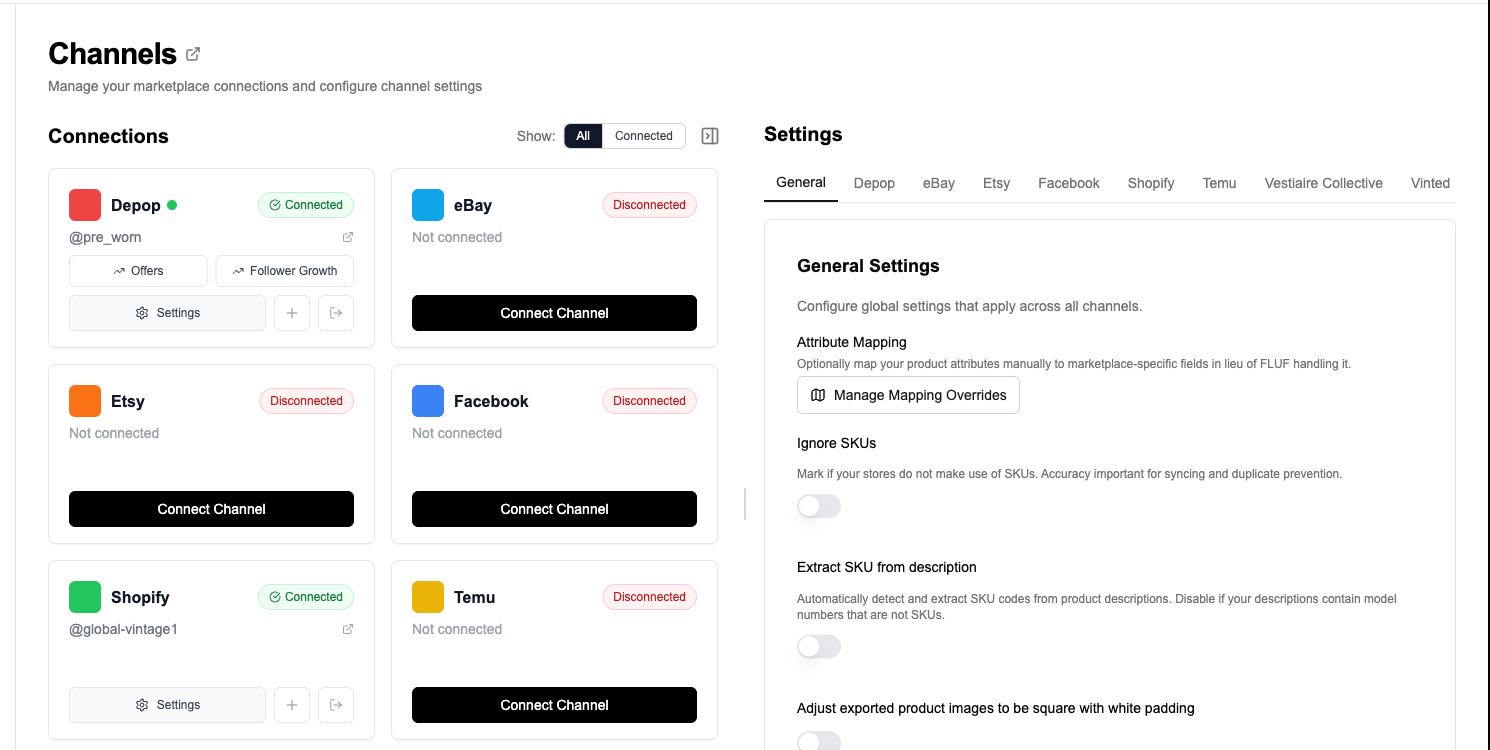
Link the channels where your buyers already shop, such as eBay, Vinted, Depop, Shopify, Etsy and Facebook Marketplace. Depop, eBay, Etsy and Shopify connect directly, while some channels ask you to keep the free Chrome extension alongside your account for day-to-day listing traffic. You complete this setup once, then every later find flows through the same dashboard.
2. List each find once, with honest condition detail
Create one listing per item with clear photos, measurements and a frank condition note. Push it to the channels that suit it: fashion to Vinted and Depop, tools and bikes to eBay and Facebook Marketplace, higher-value pieces to Etsy or Vestiaire. Crosslisting, inventory sync and order sync sit on every FLUF plan, so even the cheapest tier covers the core routine.
3. Sell in one place while stock stays accurate everywhere
When a piece sells on one marketplace, inventory sync takes it off your other connected channels. That single behaviour is what makes one-off reselling viable at volume: without it, two buyers can pay for the same jacket within the hour. Automatic relisting, offer handling and smart pricing then join from Seller upwards to keep slow movers visible without daily effort from you.
What stays manual
FLUF Connect never bids, views or collects for you. You read each sale catalogue, attend viewings where offered, set your ceiling, collect within the stated window and pay on time. Testing electricals, cleaning, measuring, photographing and grading condition all stay in your hands, and rightly so: condition is your margin on this stock.
Pricing judgement stays yours too. Sold-price research, fee checks on each marketplace and the walk-away bid calculation need a human who has held the item. FLUF carries the catalogue work after that point, not the buying decisions before it.
Who police-auction reselling is not for
Skip this source if you want repeatable stock lines. Every lot is a one-off, so you cannot reorder a winner or build a branded range on it. Sellers who need stable SKUs should look at liquidation stock or wholesale instead.
Skip it too if you cannot collect quickly. Auction houses expect fast payment and appointment-only collection, often within days of the sale. If travel or storage is hard for you, the fees and failed collections will eat the bargain.
Finally, this route suits sellers, not one-time bargain hunters. If you buy a single bike for yourself, you need no software. If you buy ten lots a month and list each across several marketplaces, the listing labour and the double-sale risk are exactly what FLUF removes. Readers coming from the saleroom-operator side should see our auction houses page instead, which covers the house catalogue rather than the bidder. For the full set of stock-source guides, start at FLUF solutions for inventory-led sellers.
What FLUF Connect covers for auction stock
| Job | How FLUF Connect helps |
|---|---|
| Show one find on many marketplaces | Crosslist from one dashboard to 60+ channels |
| Stop a one-off selling twice | Inventory sync takes the sold piece off your other connected channels |
| Keep slow movers visible | Automatic relisting is included from Seller upwards |
| Answer offers without living in every app | Offer management from one place, included from Seller upwards |
| See every sale together | Order sync gathers marketplace orders into one dashboard |
Pricing
Start with 7 days for £1, then from £9/month with full access. Card details are required, and there is no free plan. After the trial you move onto the plan that fits your listings, starting at Starter:
| Plan | Monthly | Yearly | You save | Crosslisted products |
|---|---|---|---|---|
| Starter | £9/month | £59/year | 45% | Unlimited |
| Pro | £29/month | £199/year | 42% | Unlimited |
| Super Seller | Custom pricing — tell us what you need | Unlimited | ||
Automatic relisting, offer management, smart pricing and listing boosts are included from Pro upwards. Starter covers unlimited crosslisting, inventory sync, order sync and Instagram posting without them. Accounting integrations are included from Pro upwards. Yearly billing is charged once a year. New accounts get 7 days for £1, then move onto a plan.
Save 42% when you pay yearlyCrosslisting, inventory sync and order sync sit on every plan. Automation such as relisting, offer management and smart pricing joins from Seller upwards. Full detail lives on the pricing page, and order handling help sits on the inventory sync feature page.
Sources and verification
- John Pye Auctions, Police Auction, Nottingham: sale notes state lots may include police seizures and government agency stock, sold as second-hand goods with no guarantees.
- Wilsons Auctions: UK and Ireland auction house running government and seized-asset sales; current sale lists include unreserved government auctions.
- Business News Wales, Wilsons awarded police auction contract: four-year contract from South Wales, Gwent and Dyfed Powys commissioners for seized-goods storage and disposal.
- London City Hall, MOPAC decision on disposal by public auction: Metropolitan Police route for found property and surplus assets through public auction.
- Save the Student, how to buy at police auctions: plain-English guide naming Wilsons and John Pye as the main police-sale houses.
- eBay UK, fees for private sellers: free selling for UK private sellers outside motors, within listing limits.
- eBay UK, fees for business sellers: listing fees plus transaction fees including final value and regulatory fees.
- Depop, sell with 0% selling fees: no selling fee for sellers; payment processing and boosting fees still apply.
- GOV.UK, HMRC side-hustle tax reminder: the £1,000 trading allowance: earn more and you may need Self Assessment.
Frequently Asked Questions
Yes. These are public sales run through established auction houses, including John Pye and Wilsons Auctions. Sign up with the house first, bring ID, and read the sale terms for deposits and collection windows before you bid.
Add the hammer price, the sale's buyer premium plus VAT, travel or delivery for collection, and cleaning or testing. Each sale sets its own premium in its terms, so work the full landed cost before you set a top bid.
Yes. The auction passes ownership to the buyer, and resale is standard practice. Keep your auction invoice as proof of where each piece came from, and never list anything you believe is counterfeit.
You list each find once at quantity one and crosslist it to your connected marketplaces. When it sells anywhere, stock sync removes it from the rest. Glance at orders daily as backup and pull down anything out of step by hand.
New sellers start with a small paid trial with full access, and a card is required. There is no free plan. The pricing section above shows the current offer and the full table.
It depends on your channels. Depop, eBay, Etsy and Shopify connect directly. Some marketplaces use the free Chrome extension for day-to-day listing traffic, so check the channel list for the ones you sell on.
Turn Auction Wins Into Listings
Plans from £9/month. Set up in under 10 minutes.