



Yes. Storage-auction buyers who clear lockers most weeks fit FLUF Connect well, because every find is a single item that should be seen on several marketplaces at once. You list each piece a single time, stock sync removes it everywhere the moment it sells, and upper-tier plans handle relisting and offers for you.
Storage auctions move fast. You bid on the contents of a whole unit, usually from photos, and the operator sets a clearance deadline once the hammer falls. Platforms such as iBidOnStorage run online storage auctions across the UK with live bidding on individual lockers. Winners take everything, clear the unit on time, and keep whatever resells. That all-or-nothing intake shapes every decision below, from bidding limits to listing order.
This page differs from our auction houses guide, which covers sellers with standing inventory and repeat catalogue. Locker buying gives you mixed one-off lots with no restock, so speed and single-item accuracy matter more than catalogue depth.
Key Takeaways
- Locker stock is single-quantity by nature, so each find needs exposure on several marketplaces at once.
- Set your maximum bid from likely resale value minus fees, postage, and the duds you will throw away.
- List high-value and seasonal pieces first, because clearance deadlines arrive before slow items sell.
- One listing shown everywhere beats the same item typed out separately on each marketplace.
- Stock sync removes a sold item from every channel, which stops two buyers paying for one find.
- Collection, testing, cleaning, photos, and packing stay manual work that software cannot do for you.
Is storage-auction stock worth reselling?
Locker buying pays when you treat the whole unit as the purchase, rather than falling in love with one visible item. Photos show part of the story. Boxes stay closed, electricals stay untested, and soft furnishings hide stains until you open them at home. Price the unit on what you can see, then assume a share of it goes straight to recycling.
Work out your ceiling before you bid. Add up likely resale value for the visible pieces, subtract marketplace fees, postage, and packing, then subtract a margin for the items that turn out to be rubbish. Your maximum bid sits below that figure. Buyer premiums and clearance deposits vary by operator, so read the auction terms on the listing page before committing.
Fees decide more deals than sourcing skill. Check current selling costs on the Vinted Help Centre selling section and the Depop Help Centre fees and taxes section before you list, since thin-margin locker finds leave little room for surprises. eBay selling fees vary by category, so confirm them on the current eBay fees help page while you plan. Facebook Marketplace sales must follow the Facebook Commerce Policies, which also note that Marketplace is intended for consumer-to-consumer sales.
Time is the second cost. A locker takes a van trip, a sorting session, a testing bench, a photo setup, and listing time for every keepable piece. That labour suits buyers who process units most weeks and reuse the same routine. It rarely suits someone hoping a single spectacular find covers the bid, because most units hold ordinary household goods with steady but modest resale value.
What sells best from storage units?
Lockers reflect ordinary lives, so the strongest categories are everyday goods with broad demand. Branded clothing in good condition moves well on Vinted and Depop. Small electronics, tools, and kitchen appliances do well on eBay, where buyers search by model number. Vinyl, cameras, games consoles, and collectables reward knowledge, since one rare title can carry the unit.
Furniture sells, though it brings storage and delivery questions. List large pieces on Facebook Marketplace and eBay with collection terms stated plainly in the description. Clear photos with measurements filter out buyers who cannot collect, which saves long message threads.
Condition sets the price with locker stock. Buyers accept used goods, yet they punish surprises. Grade each piece against what you can defend in photos: working or untested, cleaned or as found, complete or missing parts. State faults in the first lines of the description, since returns and disputes cost more than any single sale is worth.
Some finds never belong online. Personal papers, photo albums, and documents should go back through the operator where possible. Perishables, damaged upholstery, and anything covered in mould go straight out. Restricted items, including some electronics with damaged batteries and age-limited goods, need a policy check on each marketplace before listing.
How FLUF Connect handles locker stock in three seller actions
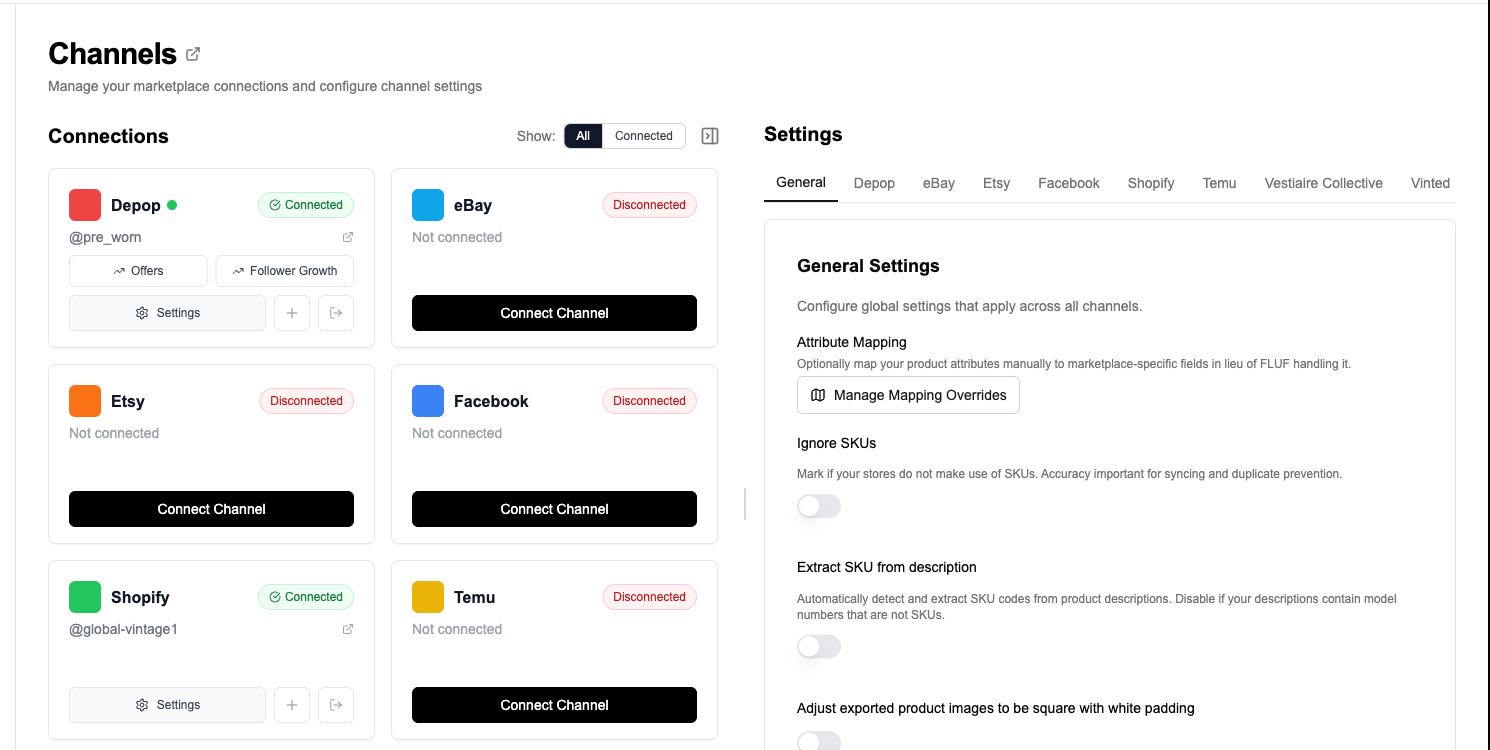
First, connect your marketplace accounts. Depop, eBay, Etsy, and Shopify connect directly, while some channels use the free Chrome extension for day-to-day listing traffic. The product supports 60+ marketplaces, so locker finds can appear everywhere their buyers shop.
Second, review each find and create the listing a single time. Write the title, condition notes, measurements, and photos once, then choose which marketplaces should carry it. Fragile or collection-only furniture might suit eBay and Facebook Marketplace, while branded clothing goes to Vinted and Depop at the same time.
Third, crosslist and let stock sync guard the single items. When a piece sells on one marketplace, FLUF removes it from the others, which stops two buyers paying for the same find. That protection matters most with locker stock, because every sale is the only one. Sellers on upper-tier plans also get automatic relisting, offer management, smart pricing, and bulk edits, so stale listings refresh without evening admin sessions.
Start Your GBP 1 Trial (7 days for £1, then from £9/month, card required).
What stays manual with locker stock
Software starts where the van stops. You still collect the unit, sort keepers from rubbish, and clear the space by the operator deadline. Nothing lists an item you have never photographed, so the camera work stays yours: daylight, plain background, close-ups of labels, and honest shots of every fault.
Testing stays yours too. Plug in electricals, check batteries for swelling, try every button, and mark anything untested as untested. Buyers of used goods accept risk they can see, while hidden faults return as disputes. Cleaning, steaming, and simple repairs sit in the same manual pile, alongside measuring clothes and furniture so listings carry numbers buyers trust.
Packing and posting stay manual as well, plus answering buyer questions about condition and collection. FLUF centralises orders from connected marketplaces, which keeps packing lists in one place, though the tape gun remains firmly in your hands.
Who storage auctions are NOT for
Locker buying suits repeat buyers with transport, storage space, and tolerance for duds. It gives little to everyone else. Anyone clearing a single unit from a relative needs a straightforward local sale, rather than a crosslisting subscription. Anyone who wants guaranteed manifests should read our liquidators guide, where pallet buying offers graded stock with paperwork instead of blind boxes.
FLUF fits sellers who source on repeat and sell physical products most weeks. Side-hustle resellers clearing several lockers a month use crosslisting and stock sync to move single items faster. Scaling sellers add relisting and bulk edits on upper-tier plans. Enterprise retailers with custom warehouse systems sit outside what the product does, and sellers whose buyers live on channels FLUF does not support should check the channel list first.
What FLUF does for locker sellers
| Task | How FLUF helps |
|---|---|
| List one find everywhere | Write the listing once, then crosslist it to each marketplace that suits the item. |
| Stop double-selling single items | Stock sync removes a sold piece from every connected channel. |
| Keep stale listings visible | Automatic relisting on upper-tier plans refreshes listings on supported channels. |
| Handle offers across apps | Offer management on upper-tier plans answers low offers without constant phone checking. |
| Price many items fast | Bulk edits and smart pricing update groups of listings together. |
| Track all orders | Order sync gathers marketplace orders into one dashboard for packing. |
Crosslisting and stock sync come on every plan, while relisting, offer management, and smart pricing come from Seller upwards. The product supports 60+ marketplaces, so coverage grows with your sourcing.
Ready to move locker finds faster? Start Your GBP 1 Trial
Pricing
7 days for £1, then from £9/month. Card required. Full price table below:
| Plan | Monthly | Yearly | You save | Crosslisted products |
|---|---|---|---|---|
| Starter | £9/month | £59/year | 45% | Unlimited |
| Pro | £29/month | £199/year | 42% | Unlimited |
| Super Seller | Custom pricing — tell us what you need | Unlimited | ||
Automatic relisting, offer management, smart pricing and listing boosts are included from Pro upwards. Starter covers unlimited crosslisting, inventory sync, order sync and Instagram posting without them. Accounting integrations are included from Pro upwards. Yearly billing is charged once a year. New accounts get 7 days for £1, then move onto a plan.
Save 42% when you pay yearlyStart with the trial, then pick the plan that matches how often you clear lockers. Sellers who list most weeks usually land on a plan with automation, since relisting and offers repay the difference in saved evenings. See pricing and the solutions hub for related seller guides, plus inventory sync for how single-item protection works.
Sources & Verification
- iBidOnStorage current UK storage auctions, with live locker listings, whole-unit bidding, clearance terms. Verified September 2026.
- Vinted Help Centre, selling section, with current seller rules and fees. Verified September 2026.
- Depop Help Centre, fees and taxes, with current seller fees. Verified September 2026.
- Facebook Commerce Policies, covering Marketplace listing rules and consumer-to-consumer scope. Verified September 2026.
- eBay seller fees help, so confirm current category fees before listing. Official help centre.
- FLUF pricing and solutions hub, with plan details and related guides on this site.