



Yes. If donations pile up faster than your shop floors can sell them, a central online operation turns that overflow into income. FLUF Connect lets one team photograph and describe each item a single time, show it on every connected marketplace at once, and take it down everywhere the moment it sells elsewhere.
This page is for the central operation, not the single shop. The charity shops page covers putting one shop’s rails online. You sit above that. You run retail for several shops, a hospice chain or a trading company, and stock arrives from every site: unsold rails, warehouse overflow, booked-in donations that never reached a hanger. Your problem is triage at scale and listing speed across channels, and that is what FLUF Connect removes.
Key Takeaways
- Pooled excess stock from several shops feeds one online listing operation.
- Grading splits vintage pulls and resaleable lines from rag before anything lists.
- One FLUF listing publishes the same item to each connected marketplace together.
- Matched quantities stop a one-off piece selling twice on different marketplaces.
- Sorting, steaming, photographs, pricing and posting stay with your team.
- Single shops and rag-only volumes should look elsewhere, as explained below.
Is Charity Excess Stock Worth Selling Online?
Often yes, because the alternative pays so little. The Charity Retail Association counts more than 10,000 charity shops operating across the UK, and nearly every one of them produces a weekly surplus: end-of-rail clothing, bric-a-brac, books and electricals that local footfall never clears. Surplus sold on to rag merchants moves by weight for a small fraction of what a wearable piece reaches online. A central online rail captures that gap.
Gift Aid survives the move online, provided the paperwork came first. Under the Retail Gift Aid arrangement, the shop sells donated goods as the donor’s agent and the donor gifts the proceeds, which lets the charity claim on the cash gift. GOV.UK sets out the conditions under selling donated goods on behalf of individuals. Donors must sign up before the sale, so get the agency forms into every contributing shop before their stock travels to the hub. This is guidance drawn from the official notes, so confirm your setup with your finance team.
Fee placement decides where each grade belongs. Vinted charges sellers nothing: listings carry zero selling fees while buyers pay a protection fee of 5% plus 70p at checkout, and sellers dispatch within 5 days (Vinted: how it works). Depop advertises 0% selling fees on its sell page (depop.com/sell). eBay is the heavy lifter for depth and variety, but charity trading teams selling there face business seller terms with listing fees plus final value fees on each sale (eBay: fees for business sellers), so put thin-margin lines where fees bite least.
One tax point sits outside every marketplace. A charity does not pay tax on trade profits that further its aims, stays under the small trading exemption, or runs through a trading subsidiary, while other profits stay taxable (GOV.UK: charities and trading). Selling donated goods usually sits on the safe side of that line, but bought-in new goods can count as trading. Ask your finance team which side your online operation falls on before scale-up.
What Sells Well From Excess Donations
Vintage and designer pulls lead the field. One 1970s leather jacket or band tee found in a pooled intake can fund a week of hub wages, and brand buyers on Depop and Vinted search those labels daily. Pull anything with a quality label, a made-in date or heavy hardware into a separate rail before general grading starts.
Branded menswear and childrenswear follow close behind. Coats, boots, football shirts and sealed toy donations move fast on Vinted, where buyer fees keep low-ticket prices attractive. Books, vinyl and collectables suit eBay, where collectors bid up lots that would sit for months on a shop shelf. New-with-tags donations from corporate partners deserve their own listings with the tags photographed, since condition certainty earns higher prices.
Keep rag-grade stock out of the listing queue entirely. Stained, torn or incomplete items will never clear photography and packing time, so bag them for textile merchants at intake. Likewise, large furniture and electricals without safety checks belong in local collection or store sale, since posting costs and testing liability eat the margin.
How Selling Excess Stock Works With FLUF Connect
The workflow runs in three passes: connect, review, crosslist.
First, connect the marketplaces you sell on. Depop, eBay, Etsy and Shopify connect directly. Channels such as Vinted, Facebook Marketplace, Poshmark, Grailed, Mercari, Whatnot and Vestiaire need the free Chrome extension active while your listing traffic goes through. Install it once on each hub computer and leave it running while the team works.
Second, review the listing FLUF prepares for each piece: title, photographs, description, price and quantity. Because pooled stock is nearly all one-offs, quantity stays at one and each listing describes the actual item in the photographs. Set the price from sold listings for the same label, then move down the rail.
Third, publish that listing to every channel you switched on. FLUF places the same piece on each marketplace together, so a vintage coat meets Depop browsers, Vinted searchers and eBay bidders from a single writing job instead of three.
Start Your GBP 1 Trial List this week’s pulls across every channel tonight.
What FLUF Keeps Matched While You Sell
| Capability | What it means for charity retail teams |
|---|---|
| List once, publish widely | One description serves 60+ marketplaces, so a van-load of graded pulls needs dozens of listings, never hundreds. |
| Quantity matching | Sell a size run on eBay and the Vinted, Depop and Shopify quantities fall by the same amount automatically. |
| Oversell protection | When a one-off piece sells anywhere, the listing comes down everywhere else before a second buyer can pay for it. |
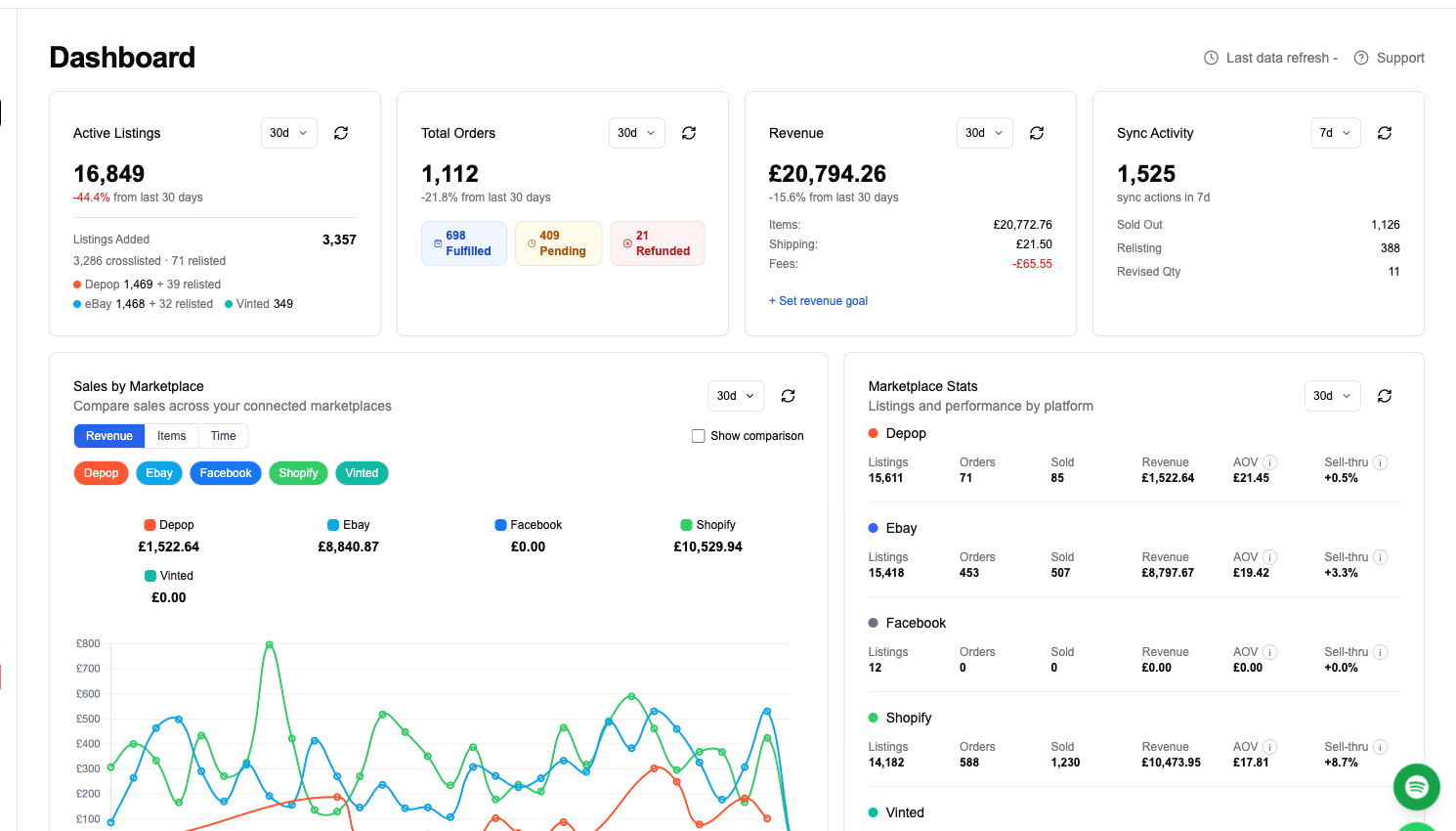
| Order collection | Orders from every channel gather in one dashboard, so the packing bench works from a single pick list each morning. |
| Automatic relisting | Ended listings go back up by themselves on plans from Seller upwards, which suits always-on donation flows. |
| Bulk editing | Drop prices across a slow rail or adjust postage everywhere without opening each listing in turn. |
What Stays Manual
FLUF never touches your stock, so the physical work stays with the hub team. You collect from contributing shops, sort against your grading rules and set rag aside at intake. You steam, test electrics where qualified, and photograph the actual item the buyer receives, since one-off condition is the whole listing.
Pricing judgement stays with you too. FLUF carries your price to each channel, but choosing the number means reading sold prices, weighing fees and leaving room for offers. Gift Aid paperwork, donor records and trading-subsidiary admin stay yours as well. Buyer messages, returns and courier claims stay personal. A fast, polite reply protects feedback that no software can protect for you.
Who This Is Not For
Centralised excess selling punishes three kinds of operation. If you run a single shop with one rail of donations, start with the charity shops page instead, which covers listing straight from the shop floor. If your surplus is only fit for rag, keep the merchant contract, because photography time will never pay back on unsaleable textiles. And if you need a free plan, FLUF is the wrong tool, since every tier is paid and the trial itself asks for a card up front.
Teams that only want buying, valuation or shop-floor EPOS should look elsewhere as well. FLUF covers the online half: listing, matching and order collection across marketplaces. It does not run your tills, your vans or your rag contracts.
Pricing
| Plan | Monthly | Yearly | You save | Crosslisted products |
|---|---|---|---|---|
| Starter | £9/month | £59/year | 45% | Unlimited |
| Pro | £29/month | £199/year | 42% | Unlimited |
| Super Seller | Custom pricing — tell us what you need | Unlimited | ||
Automatic relisting, offer management, smart pricing and listing boosts are included from Pro upwards. Starter covers unlimited crosslisting, inventory sync, order sync and Instagram posting without them. Accounting integrations are included from Pro upwards. Yearly billing is charged once a year. New accounts get 7 days for £1, then move onto a plan.
Try the full workflow on one week’s intake with 7 days for £1, then from £9/month: a GBP 1 trial for 7 days, card required. There is no free plan, and every paid tier includes unlimited listings and unlimited marketplaces, so one-off donations never count against a cap. The entry tier covers crosslisting with inventory sync and order sync included. Anything automatic, from relisting to offer handling, joins from Seller upwards. Save 42% when you pay yearly
Start Your GBP 1 Trial Turn this week’s surplus into live listings.
Sources & Verification
- More than 10,000 charity shops operate across the UK per the Charity Retail Association (ChannelX, August 2026).
- Gift Aid on shop sales works through an agency arrangement where the shop sells goods on the donor’s behalf and the donor gifts the proceeds (GOV.UK: Gift Aid donation claims; full conditions in Chapter 3: Gift Aid).
- Vinted sellers pay zero selling fees; buyers pay a protection fee of 5% plus 70p, and sellers dispatch within 5 days (Vinted: how it works).
- Depop advertises 0% selling fees for sellers (depop.com/sell).
- eBay business sellers pay listing fees plus final value fees when items sell, under terms separate from private sellers (eBay: fees for business sellers).
- Charities pay no tax on primary-purpose trade, small-scale trade under the exemption limit, or trade through a subsidiary; other profits stay taxable (GOV.UK: charities and trading).