Crosslist from Amazon to Shopify: Your Own Store for the Stock You Already Sell
For merchant-fulfilled Amazon sellers who want a Shopify store without retyping their catalogue.
7 days for £1, then from £9/month.



- This route is for merchant-fulfilled Amazon sellers who want their own Shopify store for the same stock, without retyping a catalogue that already lives on Amazon.
- FLUF brings your Amazon listings in, and you publish them to Shopify from there.
- A Shopify order ends the Amazon listing for you. An Amazon sale needs one step: mark it sold in FLUF, and FLUF ends the Shopify product.
- Amazon’s seller code of conduct bans pointing Amazon buyers to your own site, so your store needs its own traffic.
- Try it with 7 days for £1, then from £9/month.
Who this route suits
You already sell on Amazon and post your own orders. Your catalogue works, your photos and descriptions are done, and Amazon sends you buyers. What you lack is a shop you control. On Amazon the customer belongs to Amazon, the fee is set by Amazon, and one account health problem can pause your income.
A Shopify store fixes the ownership side. The customer list is yours, the checkout is yours, and a buyer who comes back next month pays you without a referral fee. The catch is traffic. Nobody finds a new Shopify store by accident, so it suits sellers who have a brand, a social following, repeat buyers or a budget for ads.
It suits you less if your sales depend on shoppers who search Amazon, click the cheapest offer and never look at the seller’s name. Those buyers will not follow you to a website.
What each sale costs on Amazon and on Shopify
Amazon’s Professional plan is £25 a month excluding VAT, plus a referral fee on every sale that depends on the category. In Clothing and Accessories it is 5% up to £15, 10% from £15 to £20, and 15% above £20. Shopify’s Basic plan is £25 a month on monthly billing, or £19 a month billed yearly, and Shopify Payments charges 2% + 25p per online card payment.
Take a £30 top. On Amazon the referral fee is 15%, so £4.50 goes to Amazon. On your Shopify store the card fee is 60p plus 25p, so 85p. The £3.65 difference on every sale is the money you have to pay for your own marketing, and it is the reason a store with repeat buyers earns more than the same store bought with ads alone.
Amazon buyers stay Amazon buyers
Amazon’s selling policies and seller code of conduct say you may not try to circumvent the Amazon sales process or divert Amazon customers to another website. That rules out a link to your store in a listing, a leaflet in the parcel pointing to your site, or a message inviting the buyer to order direct next time. The same code says you may only use a customer’s address to fulfil the order, and you may not use it to contact them.
So do not plan to move Amazon customers across. Plan for two separate audiences. Amazon keeps the shoppers who start their search there. Your Shopify store is for the people you reach yourself: your Instagram or TikTok followers, a mailing list built from your own site, local customers, trade buyers and anyone who searches your brand name.
Jobs Amazon did that your store now does
On Amazon, the checkout page, the returns flow and the buyer’s trust in the site all come ready-made. On Shopify you set each one up before the first order. UK rules for online and distance selling say you must tell customers they can cancel an order up to 14 days after it is delivered. Before they order, you must show your business name and contact details, the full price including taxes, delivery costs and how to cancel.
Write those into your Shopify store policies and product pages before you publish anything. Add clear delivery prices, a returns address and a contact email. Your Amazon reviews stay on Amazon, so early Shopify buyers are trusting a store with no track record. Good photos, honest descriptions and a quick reply to the first few emails do most of the work.
How to crosslist from Amazon to Shopify
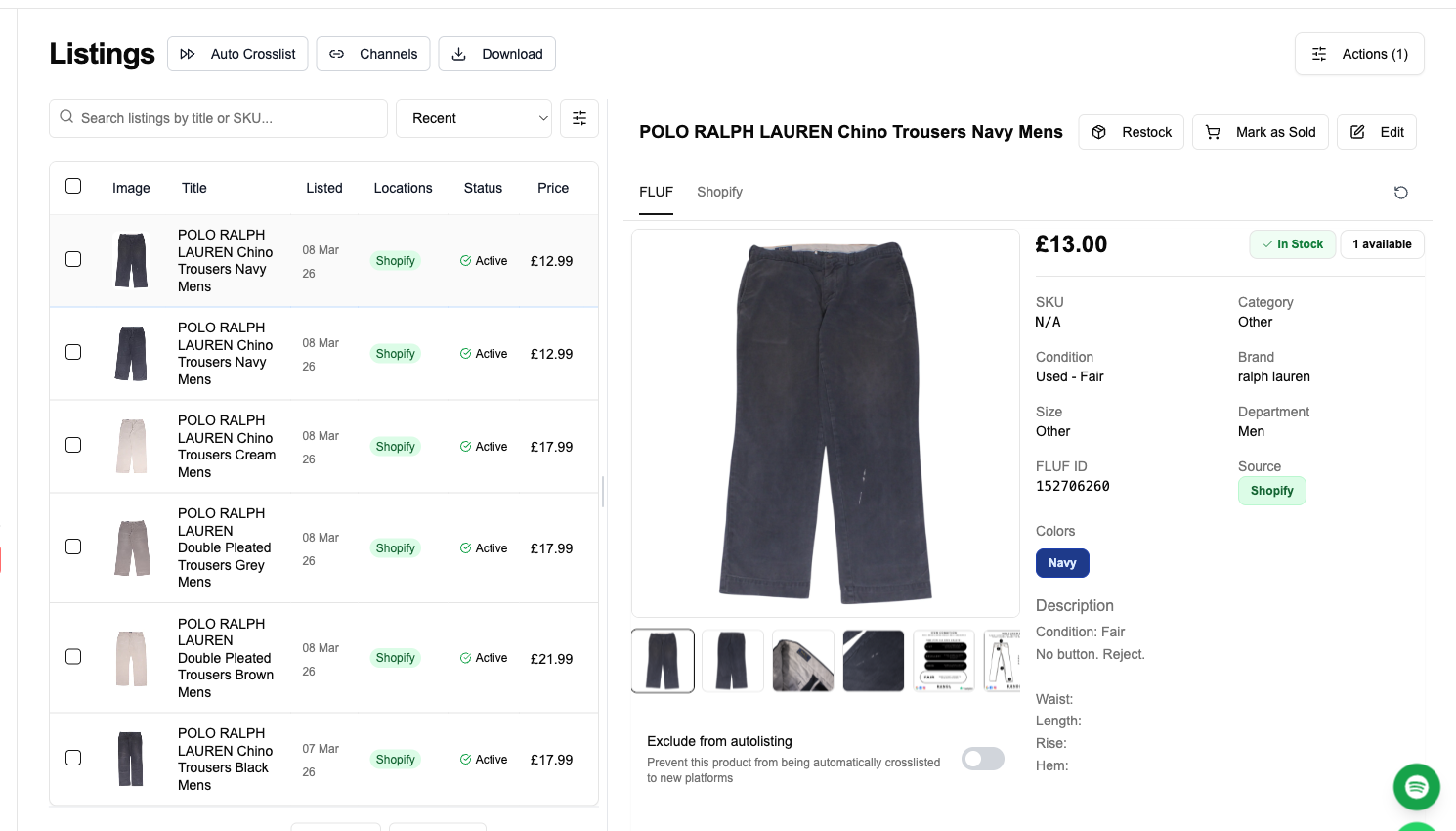
- Connect Amazon by signing in with your Amazon seller account. FLUF brings in your Amazon listings.
- Connect your Shopify store to FLUF Connect.
- Choose the products you want in the store. Start with lines you hold several units of.
- Set Shopify prices. Many sellers price a little lower on their own store, because there is no referral fee to cover.
- Review each product and publish it to Shopify. Your photos and descriptions come with it, so you are editing, not rewriting.
Keeping one pool of stock right
You sell the same units in two places, so the question is what happens when one sells. FLUF sees Shopify orders. When a customer buys from your store, FLUF ends the Amazon listing and you do nothing on Amazon.
An Amazon sale is different, because FLUF does not see it. When an order comes in on Amazon, mark the item sold in FLUF as part of dispatching it, and FLUF ends the product on Shopify. On a line where you hold plenty of stock this can wait until the end of the day. On your last unit, do it before you pack the parcel.
What FLUF Connect does on this route
| Amazon | Shopify | |
|---|---|---|
| How you connect | Sign in with your Amazon seller account | Connect your Shopify store |
| Bring existing listings into FLUF | Yes | Yes |
| FLUF sees a sale here | No, you mark it sold in FLUF | Yes |
| FLUF ends the listing here when the item sells elsewhere | Yes | Yes |
| Listing type | Merchant-fulfilled offers | Products in your store |
How much it costs
Crosslisting and inventory sync are on every plan. Start with 7 days for £1, then from £9/month, then plans from £9/month.
| Plan | Monthly | Crosslisted products |
|---|---|---|
| Starter | £9/month | Unlimited |
| Pro | £29/month | Unlimited |
| Super Seller | Custom pricing — tell us what you need | Unlimited |
Sources
- Amazon UK: selling fees and referral fees by category
- Shopify UK: plans and payment rates
- GOV.UK: Online and distance selling for businesses
- Amazon: Selling policies and seller code of conduct (PDF)
Sources checked September 2026.
Related guides
Frequently Asked Questions
No. Amazon's seller code of conduct bans diverting Amazon customers to another website, and you may only use a buyer's details to fulfil their order. Grow the store through your own channels instead.
No. FLUF brings your Amazon listings in, with their photos and descriptions, and you review and publish them to Shopify.
FLUF does not detect Amazon sales. Mark the item sold in FLUF and it ends the product on your Shopify store.
FLUF sees the Shopify order and ends the Amazon listing. You do nothing on Amazon.
Per sale, usually yes. On a £30 clothing item Amazon's referral fee is 15% (£4.50), while Shopify Payments on the Basic plan takes 2% + 25p (85p). You pay for your own traffic, though.
FLUF lists merchant-fulfilled Amazon offers, where you store the stock and post each order yourself.
Yes. You set the Shopify price when you review each product, so you can pass the saving on the referral fee to direct buyers.