
Buy Liquidation Pallets and Resell for Profit
How graded and ungraded returns pallets work, what the maths looks like, and how to list pallet stock across many marketplaces without selling the same item twice.
7 days for £1, then from £9/month.



Yes, pallet reselling pays, if you buy manifested stock in categories you know and you can test, clean and store what arrives. Unmanifested lots are cheaper because they are a gamble. FLUF Connect suits pallet buyers because each tested item is listed once and appears on eBay, Vinted, Depop and other channels, with stock kept in step so one sale clears it everywhere.
Key Takeaways
- Manifested means listed: the manifest grades each item, while unmanifested lots arrive blind and price in the risk.
- Test before you list: plug in, charge up and grade every return, since faulty goods sold as working bring refunds.
- Category decides margin: power tools, small appliances and branded fashion hold value; thin homeware often does not.
- List once, sell widely: one listing shown on eBay, Vinted and Depop moves pallet stock faster than manual retyping.
- Price in the duds: storage, disposal and dead stock cost money, so include them in your top bid.
- Pick the right tier: crosslisting and stock sync come on every plan, and task automation comes with higher tiers.
Is Buying Liquidation Pallets Worth It?
A pallet makes money when the working items cover the buy-in, the fees and the dead stock. That sounds plain, yet most losses come from skipping that sum. Start with the manifest, grade honestly, then bid.
Manifested pallets cost more because someone has counted and graded the contents. Unmanifested pallets cost less because nobody has. Beginners should pay the premium for a manifest while they learn how each grade behaves. Blind lots suit buyers who already know a category well enough to price unseen faults.
Here is a worked illustration with round figures. A manifested small-appliance pallet goes for a hammer price of four hundred pounds. Buyer premium, VAT and van collection bring the buy-in near five hundred. The manifest lists forty items. Testing shows twenty-eight working units, eight needing parts or a deep clean, and four fit only for scrap.
You list the twenty-eight at an average of twenty-five pounds, which is seven hundred in expected revenue. Marketplace fees, postage and packing come off that, leaving a margin near eighty pounds before your time. If only half sell in the first month, the rest of your cash sits on a shelf. Bid on that basis, and walk away when the room pushes past it.
| Line | Illustration |
|---|---|
| Buy-in with premium and collection | Near five hundred pounds |
| Working units from forty listed | Twenty-eight |
| Expected revenue at twenty-five pounds each | Seven hundred pounds |
| Fees, postage and packing | Check each marketplace fee table first |
| Margin before your hours | Near eighty pounds |
eBay business fees change, so confirm them on eBay’s business seller fee table before you model a bid. Private sellers currently face different terms, covered on eBay’s private seller fee page.
What Sells Best From Returns Pallets
Categories you can test fast win. Power tools, small kitchen appliances, vacuums, game consoles and branded trainers all check out in minutes with a plug socket and a charger. Each has a deep second-hand market on eBay, as well as fashion-led demand on Depop and Vinted for the wearable end.
Straightforward condition helps too. Items with three grades (working, spares, scrap) move quicker than items with thirty shades of wear. Branded goods with visible model numbers research well, while unbranded homeware often costs more in photos and words than it returns.
Some pallet staples deserve caution. Bedding and soft furnishings carry hygiene doubts. Fast fashion arrives in sizes that scatter across listings. Ink, paint and gas-powered goods face carrier limits and marketplace rules. Leave those lots for buyers set up to handle them.
Where to Buy Liquidation Pallets in the UK
Start with established auction houses that publish manifests and run regular retail-returns sales. William George runs retail returns auctions with free buyer registration, and John Pye Auctions sells retailer returns and overstocks by the pallet from salerooms around the country. Both let you view lots before bidding, which matters while you calibrate grades.
Read every manifest line before travelling. Check whether the lot is manifested or unmanifested, whether VAT sits on top of the hammer price, and whether collection is same-week. Add fuel or courier cost to the bid ceiling. A cheap pallet two hundred miles away is rarely cheap.
Related sourcing routes sit nearby. If pallets feel too lumpy, retail overstock gives steadier stock, while single-item finds suit smaller budgets. The liquidators page covers the trade from the supplier side.
How Pallet Reselling Works With FLUF Connect
Pallet stock arrives in bulk and leaves one item at a time. That mismatch is where sellers lose track. FLUF Connect bridges it in three seller actions across plans that cover 60+ channels.
1. Connect your channels
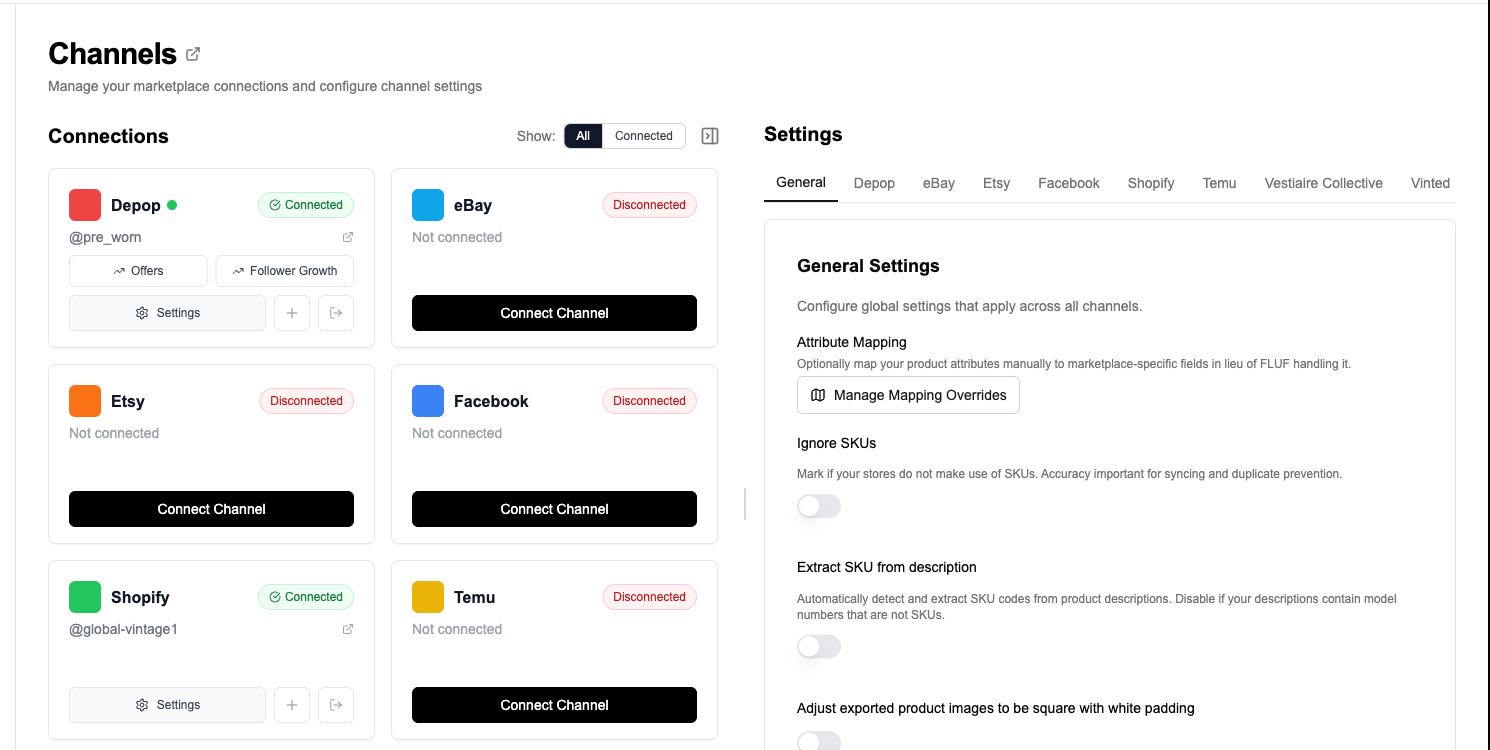
Link eBay, Vinted, Depop, Shopify, Etsy and Facebook Marketplace to one catalogue. Depop, eBay, Etsy and Shopify connect directly. Vinted, Facebook Marketplace and similar channels need the free Chrome extension for day-to-day listing traffic. Setup takes minutes per channel.
2. List each tested item once and review it
Photograph the actual unit, state its grade, and write the faults into the description. One careful listing beats three rushed copies. Review titles and prices before anything goes live, since pallet goods vary unit to unit.
3. Crosslist it and let stock sync keep step
Push the listing to every channel where it fits. When it sells in one place, stock sync clears it elsewhere, which stops the classic pallet-seller pain of selling the only working Dyson twice. Bulk editing tools reprice or tidy hundreds of live listings together when a pallet line needs to move.
What FLUF Handles and What Stays Manual
| Job | How it runs |
|---|---|
| Listing on many channels | Write it once, then crosslist to each channel you choose |
| Stock levels | One sale updates the shared quantity across connected channels |
| Orders | Marketplace orders gather in one place for fulfilment |
| Bulk changes | Find and replace text, prices and categories across listings together |
| Relisting and offers | Task automation such as automatic relisting is included from Seller upwards |
| Testing, grading and photos | Manual, always; nobody can grade a pallet sight unseen for you |
| Packing and posting | Manual; buyer-paid labels apply on some channels, see their help pages |
Two honest limits apply. A small number of channels do not report sales back, so a sale there means removing the item elsewhere by hand. And condition grading stays yours: FLUF carries your grade to each channel, yet only you can set it. Vinted sellers can check current buyer and seller rules in the Vinted help centre.
Pricing
| Plan | Monthly | Yearly | You save | Crosslisted products |
|---|---|---|---|---|
| Starter | £9/month | £59/year | 45% | Unlimited |
| Pro | £29/month | £199/year | 42% | Unlimited |
| Super Seller | Custom pricing — tell us what you need | Unlimited | ||
Automatic relisting, offer management, smart pricing and listing boosts are included from Pro upwards. Starter covers unlimited crosslisting, inventory sync, order sync and Instagram posting without them. Accounting integrations are included from Pro upwards. Yearly billing is charged once a year. New accounts get 7 days for £1, then move onto a plan.
7 days for £1, then from £9/month Save 42% when you pay yearlyThe trial needs a card, and there is no free plan. Starter is the cheapest tier, with crosslisting, stock sync and order sync included. Task automation such as automatic relisting, offer handling and smart pricing is included from Seller upwards. Save 42% when you pay yearly. Start Your GBP 1 Trial.
Who Pallet Reselling Is Not For
Pallets punish three kinds of buyer. Skip them if you have nowhere dry to store forty boxes, since hallway stock stalls fast. Skip them if you cannot collect or receive freight, because delivery failures eat the margin. And skip them if you want sealed wholesale or hands-off income: returns need testing, cleaning and honest grading, every single lot. Steady-catalogue sellers often do better with retail overstock, while small-budget hunters may prefer single-item finds from charity surplus.
Sources and Verification
- eBay business seller fees: final value fees, regulatory fee and per-order terms.
- eBay private seller fees: current private selling terms for comparison.
- William George retail returns auctions: UK liquidation and returns sales.
- John Pye Auctions: UK auction house selling retailer returns and overstocks by the pallet.
- Vinted help centre: current selling, shipping and returns rules.
Browse the full set of sourcing routes from the solutions hub, or compare catalogue-based supply on the bulk operations feature page.
Frequently Asked Questions
New buyers should choose manifested lots. The contents list lets you value the pallet before bidding and grade each unit on arrival. Unmanifested pallets cost less because faulty and missing parts stay hidden until you open the boxes.
Power every electrical, photograph faults close up, and sort stock into working, spares and scrap piles. Write the grade and every defect into each description. Returns sold as fully working when they are not lead to refunds and marketplace strikes.
Established auction houses such as William George and John Pye run regular retail returns and overstock sales with manifests and viewing days. Always confirm VAT, buyer premium and collection windows before bidding, and add travel cost to your ceiling.
More than most beginners expect. One pallet fills a garage corner once opened, and slow lines sit for weeks. Price racking, dry space and tip runs for scrap into every bid, or share a unit with another seller.
List each tested unit once in FLUF Connect, review the title and grade, then crosslist it to eBay, Vinted, Depop and other channels. Bulk editing updates prices and details across live listings together when a line needs discounting.
Crosslisted stock shares one quantity, so a sale on one connected channel clears the item on the others. A few channels do not report sales back, so remove those sales elsewhere by hand the same day.
List Your Next Pallet Faster
Plans from £9/month. Set up in under 10 minutes.